Camden County is one of the oldest, most established corners of South Jersey. Its boroughs and townships were built up in waves over more than a century — some neighborhoods date back to the early 1900s, others to the post-war boom of the 1950s and 60s. That history is part of what makes towns like Haddon Township, Runnemede, Barrington, Mount Ephraim, and Magnolia such desirable places to live. It’s also the reason so many homes here are still connected to the municipal sewer system through pipes that were installed decades before anyone thought to ask how long they’d actually last.
If you own an older home in Camden County, there’s a real chance the pipe running from your house to the city sewer main — often called the sewer lateral — is well past its intended lifespan. Unlike a leaking faucet or a tripped breaker, a failing sewer lateral doesn’t always announce itself right away. By the time most homeowners notice a problem, the pipe has often been deteriorating underground for years.
Why Camden County’s Older Homes Are Especially at Risk
A home’s age is one of the strongest predictors of what kind of sewer pipe material was used to connect it to the municipal system — and, by extension, how close that pipe is to failure. Camden County has a higher concentration of homes built before 1970 than many newer South Jersey developments, which means a meaningful share of local sewer laterals were installed using materials that are now considered obsolete by modern plumbing standards.
Older, denser boroughs — the kind with mature street trees, tightly spaced lots, and homes dating to the early-to-mid 20th century — tend to have the oldest lateral pipes still in service. In Camden County, that description fits a lot of ground: streets in and around Haddon Township, Runnemede, Barrington, Magnolia, and Mount Ephraim were largely built out well before modern PVC piping became the industry standard. Mature trees lining these older streets are a beautiful feature of the neighborhood — but their root systems are also one of the most common causes of sewer lateral failure, especially when they find their way into old clay or fiber pipe joints.
The Types of Pipe Materials Found in Older Camden County Homes
Not all old pipe is created equal. The material your home’s lateral is made from matters enormously when it comes to how urgently it needs attention.
Clay Pipe
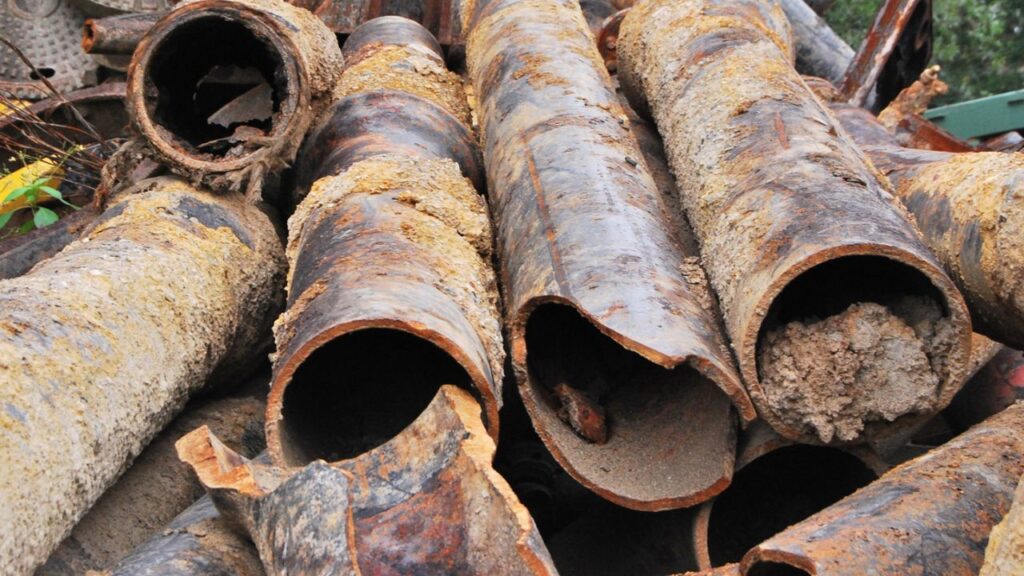
Widely used before the 1960s, clay pipe was valued for resisting chemical corrosion. The tradeoff is brittleness — clay sections crack under shifting soil and are especially vulnerable to root intrusion at the joints, where sections connect. Clay pipe typically lasts 50 to 60 years under good conditions, meaning most clay laterals still in the ground in Camden County are already at or past their expected service life.
Cast Iron Pipe
Cast iron was the standard for many mid-century homes and offered real durability — often 50 to 75 years of service. But cast iron’s weak point is corrosion. Over decades, rust builds up on the interior walls, narrowing the pipe’s diameter and roughening the surface in a process called “channeling,” which traps debris and accelerates clogging even before the pipe itself fails structurally.
Orangeburg Pipe
This is the material that should raise the most concern for homeowners in older Camden County neighborhoods. Orangeburg pipe — made from compressed wood pulp and coal-tar pitch — was manufactured and installed heavily from the 1940s through the early 1970s, largely because it was cheap and easy to install during the post-war building boom. The problem is that it was never a genuinely durable material. Orangeburg absorbs moisture over time, causing it to soften, flatten, blister, and eventually collapse under the weight of surrounding soil. Most Orangeburg pipe was only ever expected to last 30 to 50 years, and since it hasn’t been installed anywhere in the country since the 1970s, virtually every Orangeburg lateral still in the ground today is already beyond its intended lifespan.
If your Camden County home was built between the 1940s and early 1970s, there’s a real possibility that some portion of your sewer lateral is Orangeburg pipe — even if the rest of your home’s plumbing has been updated over the years. Many homeowners are surprised to learn this, since the lateral is buried and easy to forget about until there’s a problem.
Why These Pipes Need to Be Replaced — Not Just Patched
A cracked clay joint, a corroded cast iron section, or a softened stretch of Orangeburg pipe can sometimes be temporarily managed with clearing or spot repair. But temporary fixes on old pipe material tend to be exactly that — temporary. Once a pipe material has reached the end of its structural life, the surrounding soil, root systems, and water table are working against it continuously, not just at the one spot that happened to fail first.
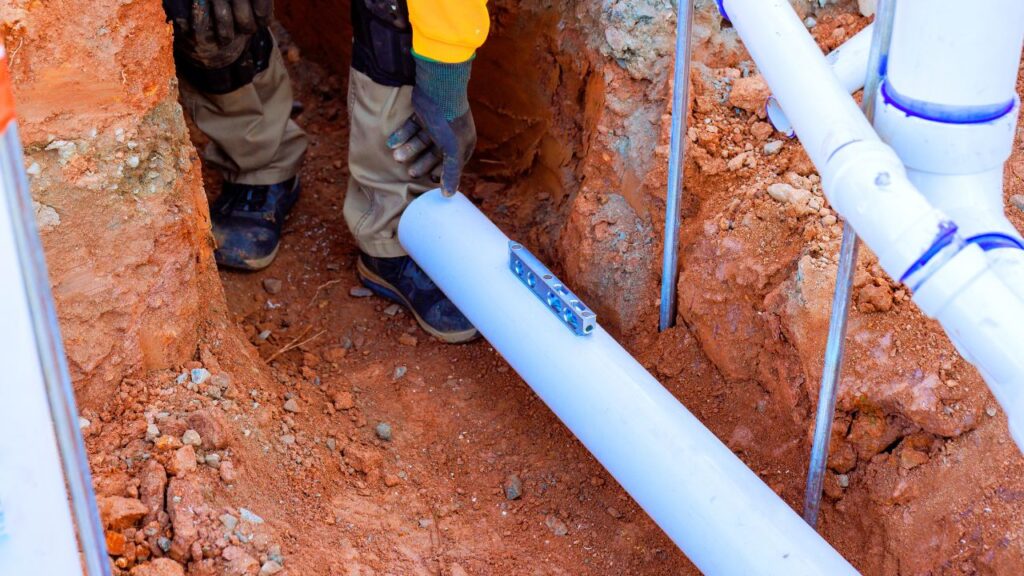
This is where many homeowners get caught off guard. A single backup gets cleared, the pipe seems fine again, and the underlying material keeps deteriorating in the background — until the next backup, often worse than the last. Replacing the pipe with a modern PVC or trenchless lining solution addresses the actual cause instead of buying a few more months before the next service call.
What Happens If an Old Sewer Lateral Isn’t Replaced
Ignoring an aging sewer lateral doesn’t make the underlying problem go away — it just moves the timeline from “manageable” to “emergency.” Here’s what tends to happen as these old pipes are left in place:
Frequent, worsening clogs. As clay pipe joints separate or cast iron corrodes and narrows, the line loses its ability to carry wastewater efficiently. What starts as an occasional slow drain often progresses to regular backups.
Root intrusion. Cracked clay and softened Orangeburg pipe are easy targets for tree roots seeking moisture. Once roots get a foothold inside a pipe, they grow larger over time, accelerating blockages and structural damage.
Sewage backups into the home. The most disruptive outcome of a failing lateral is wastewater backing up into basements, floor drains, or lower-level fixtures — often at the worst possible moment, and always at real cost to clean up and repair.
Yard and foundation damage. A collapsed or leaking lateral can saturate the soil around your foundation, contributing to settling and cracks, and can create sinkholes or soft, sunken areas in the yard above the pipe’s path.
Costly emergency excavation. A lateral that fails completely, rather than being replaced proactively, often requires emergency excavation — typically at a higher cost and on a much more disruptive timeline than a planned replacement.
This is the core pain point for Camden County homeowners with older sewer laterals: the pipe doesn’t fail all at once, and it doesn’t fail on your schedule. It fails when the roots have finally broken through, when the last remaining structural material gives way, or when a heavy rain pushes more water through an already-compromised line than it can handle. Waiting for obvious warning signs — sewage odors, gurgling drains, soggy patches in the yard — often means the pipe has already been failing quietly for a long time.
According to the American Society of Civil Engineers, the nation’s wastewater infrastructure — including the aging pipe materials still common in older communities — currently rates a D+, reflecting how widespread this kind of deferred pipe replacement really is across the country. On the homeowner side, sewer laterals built from clay or Orangeburg before the 1970s are now consistently flagged by plumbing and inspection professionals as materials that have already outlived their intended service life, regardless of whether they’ve shown visible symptoms yet.
Who’s Responsible for the Sewer Lateral — and What It Costs to Wait
One detail catches a lot of homeowners off guard: the sewer lateral running from your house to the municipal main is almost always your responsibility to maintain and replace, not the township’s. In most Camden County municipalities, the town owns and maintains the main line under the street, but the property owner is responsible for the pipe from the house out to the connection point. That means when an old clay or Orangeburg lateral fails, the repair bill lands with the homeowner — not the borough.
This is exactly why proactive replacement is almost always the more affordable path. A planned lateral replacement, scheduled on your terms, is a predictable cost. An emergency failure — especially one that causes a backup inside the home — adds cleanup, water damage remediation, and often rush service fees on top of the pipe replacement itself. Trenchless methods have also changed the math significantly in recent years, since replacing a lateral no longer has to mean excavating an entire yard, which was often the biggest cost driver in the past.
How to Know What Kind of Pipe You Have
You don’t have to guess. A professional sewer camera inspection lets our technicians see the exact material, condition, and location of any damage in your lateral — without any digging. This is especially useful for Camden County homeowners who aren’t sure of their home’s plumbing history, whether they’ve owned the property for decades or just purchased it. In many cases, camera footage reveals a mix of materials, since sections of pipe were sometimes patched or partially replaced over the years without a full lateral upgrade.
Repair, Reline, or Replace?
Depending on what the inspection reveals, there are a few paths forward. Minor, isolated damage in an otherwise sound pipe may be addressed with a sewer or water line repair. Pipes in poor overall condition, however, generally need full sewer or water line replacement — and in many cases, that doesn’t have to mean tearing up your entire yard. Our trenchless sewer repair methods can replace an old clay, cast iron, or Orangeburg lateral with a modern, durable line while minimizing disruption to your landscaping and hardscaping.
Protect Your Home Before It Becomes an Emergency
If you own an older home in Haddon Township, Runnemede, Barrington, Magnolia, Mount Ephraim, or anywhere else in Camden County, it’s worth knowing what’s running beneath your yard — before a slow drain turns into a basement backup. Professor Gatsby’s licensed plumbing technicians can inspect your lateral, identify the pipe material, and walk you through the most cost-effective path forward, whether that’s a targeted repair or a full trenchless replacement.
Contact Professor Gatsby’s today or book a sewer inspection online and find out what’s really going on beneath your property before it becomes an emergency.
Sources:
- American Society of Civil Engineers, 2025 Report Card for America’s Infrastructure – Wastewater: https://infrastructurereportcard.org/cat-item/wastewater-infrastructure/
- LegalClarity, Who Is Responsible for Sewer Line Repair: Homeowner vs. City: https://legalclarity.org/who-is-responsible-for-sewer-line-repair/
3 South Jersey Locations to Serve You