The first cold snap is when furnace problems show up. If your furnace is making noise, blowing cold air or won’t turn on, you need to decide whether to fix it or replace it. This guide covers the signs you need a new furnace, a simple rule for when repair stops making sense, and what to do first.
SAFETY FIRST: CARBON MONOXIDE
A damaged or poorly vented furnace can release carbon monoxide (CO), a colorless, odorless gas. If your CO alarm sounds, or anyone has a headache, dizziness, nausea or chest pain that eases when they leave the house, do not wait.
- Get everyone out of the house right away, including pets.
- Call 911 from outside.
- Call your gas utility.
- Do not go back in until emergency responders say it is safe.
Have a technician inspect the furnace before you use it again. Make sure you have working CO detectors on every floor and near bedrooms, and check the batteries every six months.
What Are the Signs You Need a New Furnace?
Here are the seven signs, in short. Each one is explained below.
- Your furnace is 15 years old or older.
- Your heating bills keep climbing.
- You keep paying for repairs.
- Some rooms are too hot or too cold.
- Your furnace makes banging, rattling or squealing noises.
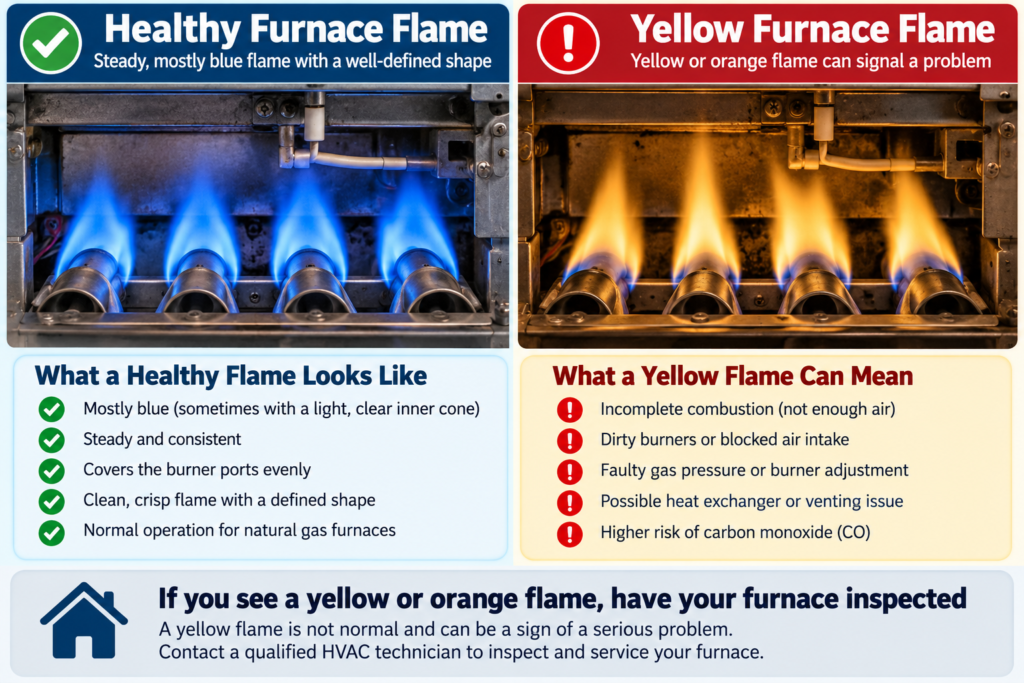
- The pilot or burner flame is yellow instead of blue.
- Your furnace turns on and off too often (short cycling).
If you recognize two or more of these, replacement is worth pricing out, even if the furnace still runs.
The 7 Signs Explained
1. How old is too old for a furnace?
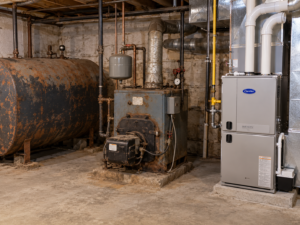
Most gas furnaces last about 15 to 20 years with regular maintenance. At 15 years, a furnace is at a decision point. It may still run, but it is more likely to break down, cost more to heat your home and use outdated parts that are hard to find. A furnace over 20 years old is living on borrowed time, so plan ahead before it fails in the middle of winter.
2. Your heating bills keep climbing
If your gas bills rise 15 to 25 percent over two or three winters and the utility rates haven’t changed that much, your furnace may be losing efficiency. Older furnaces lose efficiency as parts wear out. A new high-efficiency furnace can use noticeably less gas to make the same heat.
3. You keep paying for repairs
One repair is normal. Three service calls in two heating seasons is a pattern. If you are paying to fix a different part every year, you are putting money into a system that will keep costing you. Add up what you have spent in the last two years and compare it to the price of a new system.
4. Some rooms are too hot or too cold
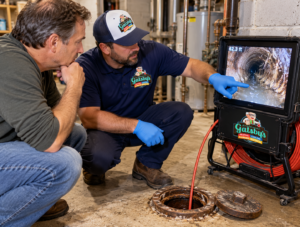
Uneven heat can come from ductwork problems, but it can also mean the furnace is too weak or worn out to heat the whole house. If a duct inspection shows the ducts are fine and the problem remains, the furnace itself may be the cause.
5. Furnace making banging noise, rattling or squealing
Some sounds are minor. A new filter or a loose panel can fix a rattle. But these sounds mean it is time to call a pro:
- Loud banging or booming when the burners ignite can mean delayed ignition.
- Squealing or screeching often points to a failing blower motor or belt.
- Grinding can mean worn bearings or a motor that is about to fail.
A noisy furnace that is also old and has been repaired before is a good reason to consider replacement.
6. The flame is yellow, not blue
A healthy gas furnace flame is steady and blue. A yellow or flickering flame can mean the fuel is not burning completely, which can produce carbon monoxide. Soot around the furnace or vent is another warning sign. If you see a yellow flame, turn the furnace off and call a heating professional before using it again. A cracked heat exchanger is a serious safety problem and usually means replacement.
7. Furnace short cycling
Short cycling means your furnace turns on, runs for a few minutes and shuts off, over and over. It can be caused by a dirty filter, an overheating furnace or a faulty sensor, and those can often be fixed. But if your furnace is also oversized, old or short cycling again after repairs, the repeated starts wear it out faster and waste fuel.
3 South Jersey Locations to Serve You
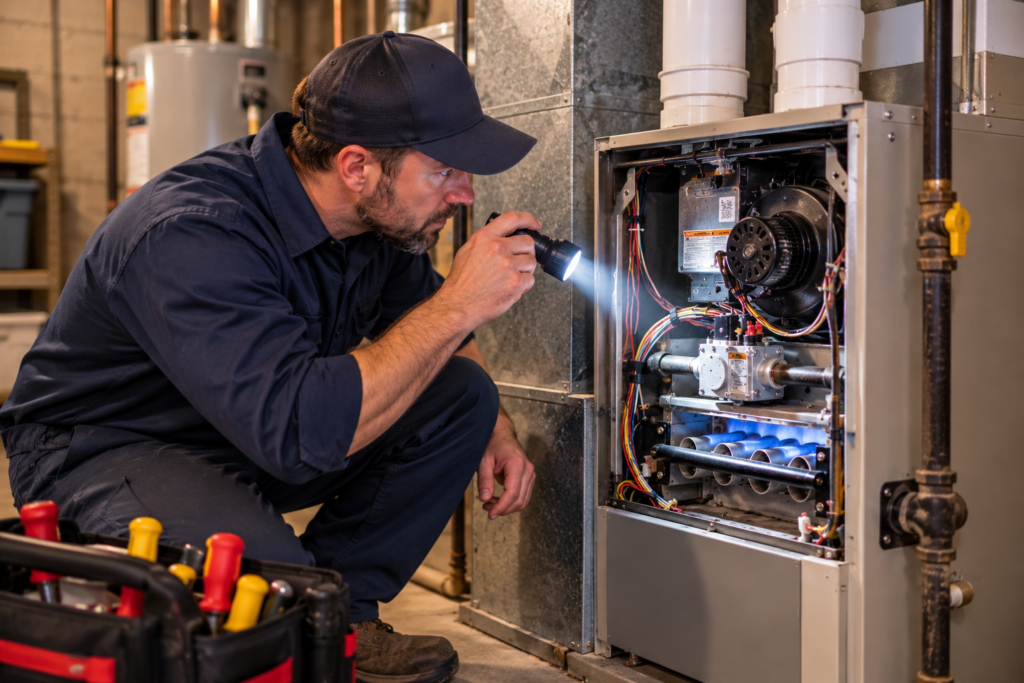
Furnace Blowing Cold Air, Won’t Turn On or Won’t Stay Lit? What to Check First
Before you call anyone, a few safe checks can save you a service call. Stop if you smell gas. Leave the house and call your gas utility or 911.
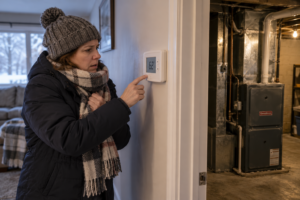
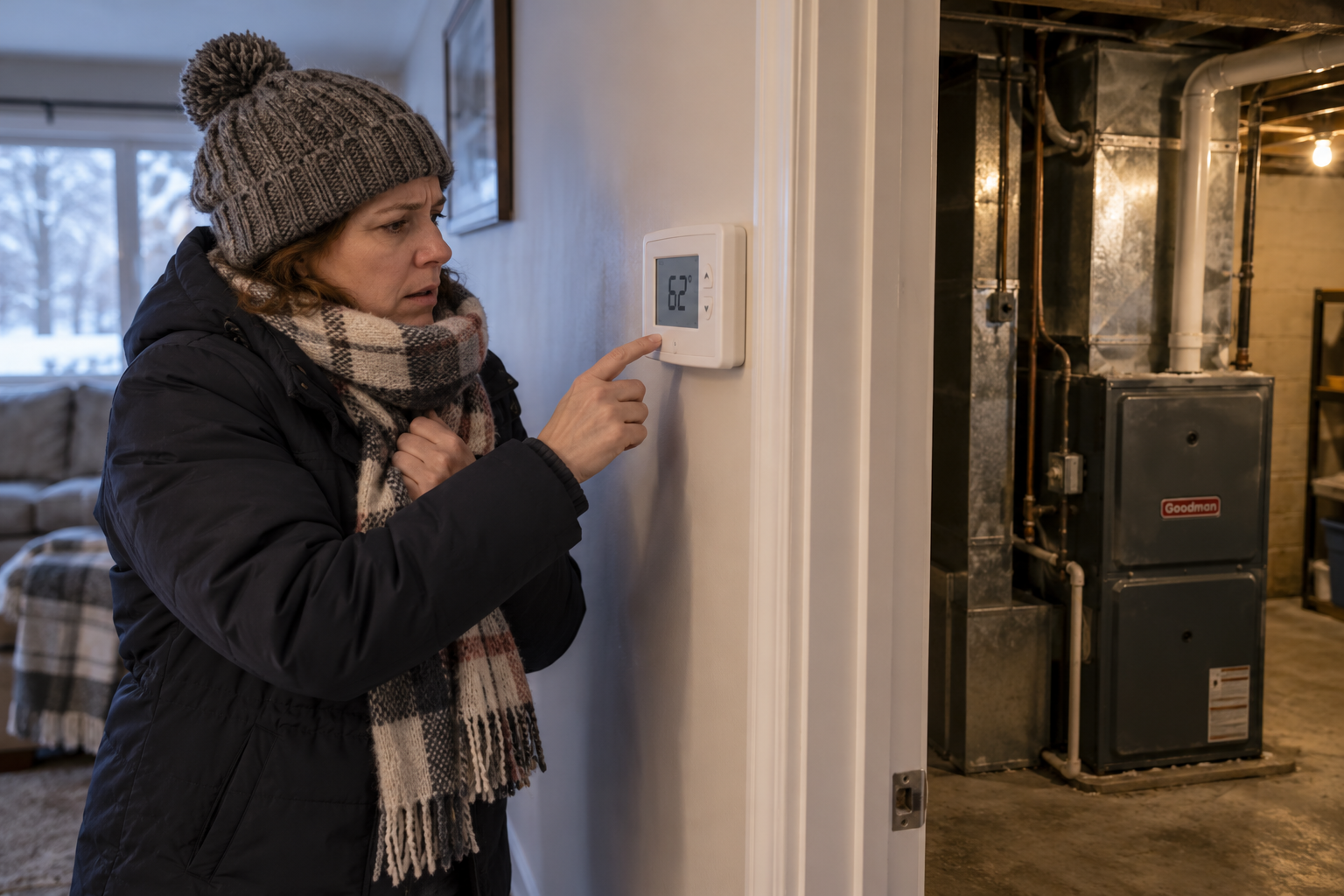
Furnace blowing cold air
- Check that the thermostat is set to “heat” and the fan is on “auto,” not “on.”
- Replace a dirty filter, which can cause the furnace to overheat and shut down.
- If the air is still cold, the cause may be a failed ignitor, flame sensor or gas supply problem. Those need a professional.
Furnace won’t turn on
- Check the thermostat settings and replace its batteries if it has them.
- Make sure the furnace power switch is on and the breaker has not tripped. Do not touch the panel if there is water nearby.
- If it still won’t start, call for service.
Furnace won’t stay lit
- A dirty flame sensor, a weak ignitor or a gas supply problem can cause the burner to light and go out.
- Relight a pilot only by following the manufacturer’s instructions, and only once. If it goes out again, stop and call a technician.
- Never try to bypass a safety control.
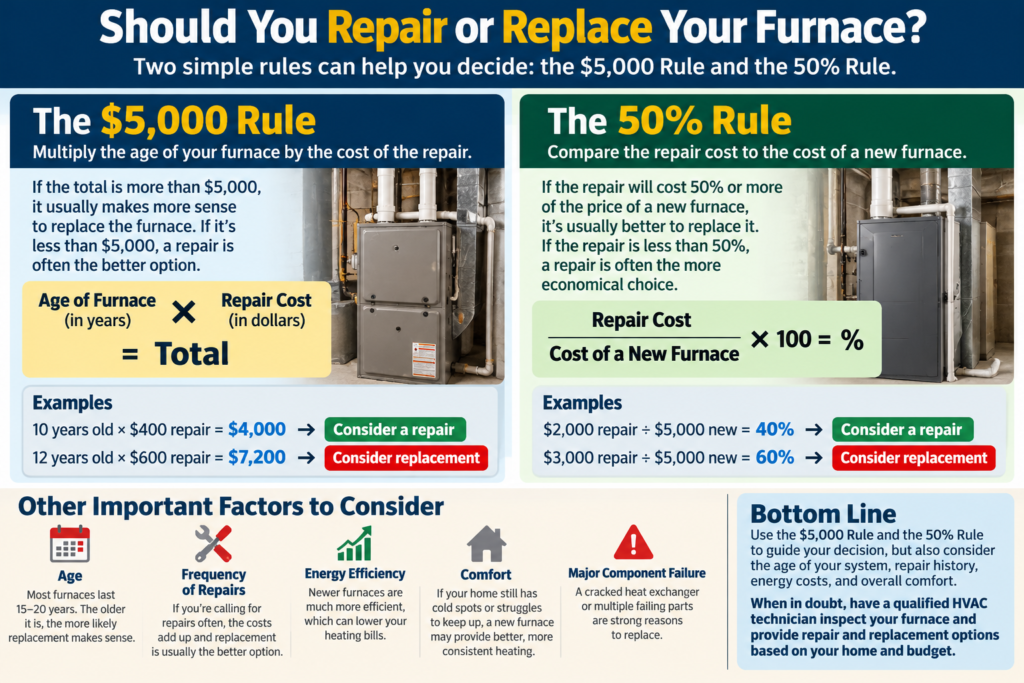
Should I Repair or Replace My Furnace?
Use these two simple rules.
Rule | How it works | Example |
The $5,000 rule | Multiply the furnace’s age in years by the repair cost. If the result is more than about $5,000, replace it. | An 18-year-old furnace with a $400 repair: 18 × $400 = $7,200. Replace. |
The 50 percent rule | If one repair costs more than half the price of a comparable new furnace, replace it. | A $3,000 repair on a system that would cost $5,500 to replace. Replace. |
Repair makes sense when: the furnace is under about 10 to 12 years old, the problem is a single minor part, the system has been maintained and no safety issues are involved.
Replacement makes sense when: the furnace is 15 years or older, repairs are frequent or expensive, your bills are climbing, parts are hard to find, or the heat exchanger is cracked.
For reference, typical U.S. repair costs run about $100 to $300 for a flame sensor, $150 to $400 for an ignitor, $450 to $1,200 for a blower motor and $1,500 to $3,500 or more for a heat exchanger. If you are wondering what a new system costs, see our furnace replacement cost guide for South Jersey.
Furnace Repair or Replacement in NJ: Call Us and We’ll Tell You Honestly
Not sure which way to go? Call us. We’ll look at your furnace and tell you honestly whether repair or replacement makes sense, even if the answer is a simple repair.
Professor Gatsby’s serves homeowners in Gloucester, Camden and Burlington Counties, including Cherry Hill, Williamstown, Mount Laurel, Marlton and nearby towns.
- 2,800+ five-star reviews
- Phones answered and fast response, 7 days a week
- Flat-rate pricing quoted before work starts
- Free in-home estimate for furnace replacement
Call (856) 210-8223 or request service online.
Furnace Repair or Replace FAQ
How long do furnaces last?
Most gas furnaces last about 15 to 20 years with regular maintenance. After 15 years, it is smart to start planning for a replacement.
Is it worth repairing a 15-year-old furnace?
It can be, if the repair is small and the furnace has been well maintained. But at 15 years, a larger repair is often money better spent toward a new system. Use the $5,000 rule and the 50 percent rule above.
Why is my furnace making noise?
Rattling can be a loose panel or a dirty filter. Banging, squealing or grinding usually points to ignition, blower or motor problems that need a technician.
Why does my furnace keep turning on and off?
That is short cycling. Common causes include a dirty filter, an overheating furnace and a faulty sensor. Persistent short cycling can also mean the furnace is the wrong size for your home.
Is a yellow furnace flame dangerous?
It can be. A healthy flame is blue. A yellow or flickering flame may mean incomplete combustion, which can produce carbon monoxide. Turn the furnace off and call a professional.