

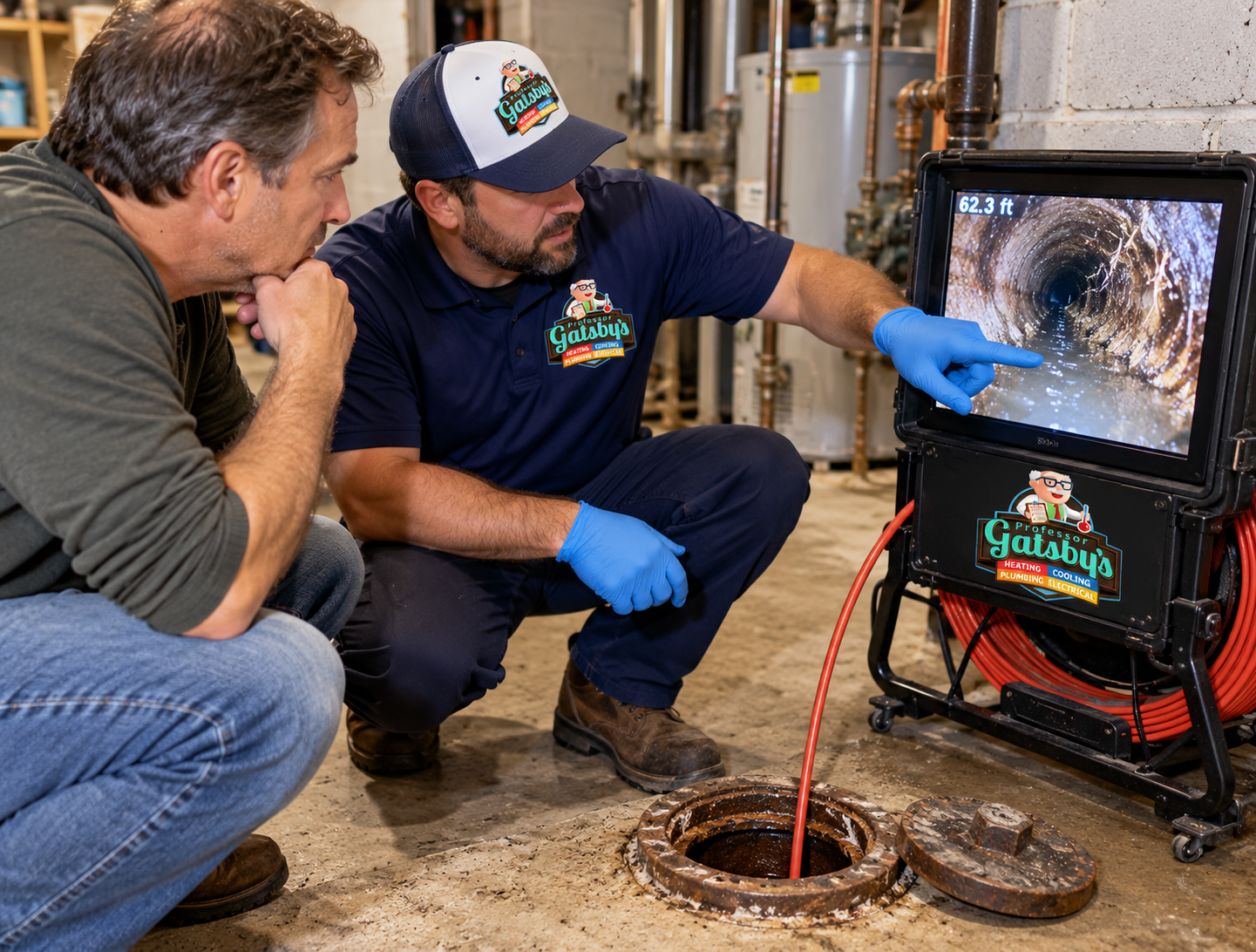
Sewer Line Repair or Replacement Quiz
SEWAGE BACKING UP? CALL (856) 210-8082 · Phones answered 7 days a week Is Your Sewer Line Clogged, Damaged, or Failing? This questionnaire examines recurring backups, slow drains, tree roots, pipe age, odors, previous cleaning, and camera inspection findings. It takes less then two minutes. Notice: JavaScript is required for this content. Based on your answers, we will give you an assessment and recommended next action you should take. Assessment Recommended next action Active Sewage Backup Stop using plumbing and request urgent assistance Structural Damage Reported Review camera evidence and compare repair and replacement options Localized Pipe Damage Evaluate whether a targeted repair may be practical Recurring Sewer Problem Arrange further investigation and camera inspection Possible Main Drain Obstruction Have the shared drain or sewer evaluated Sewer Concern Needs Evaluation Investigate persistent symptoms before major repairs
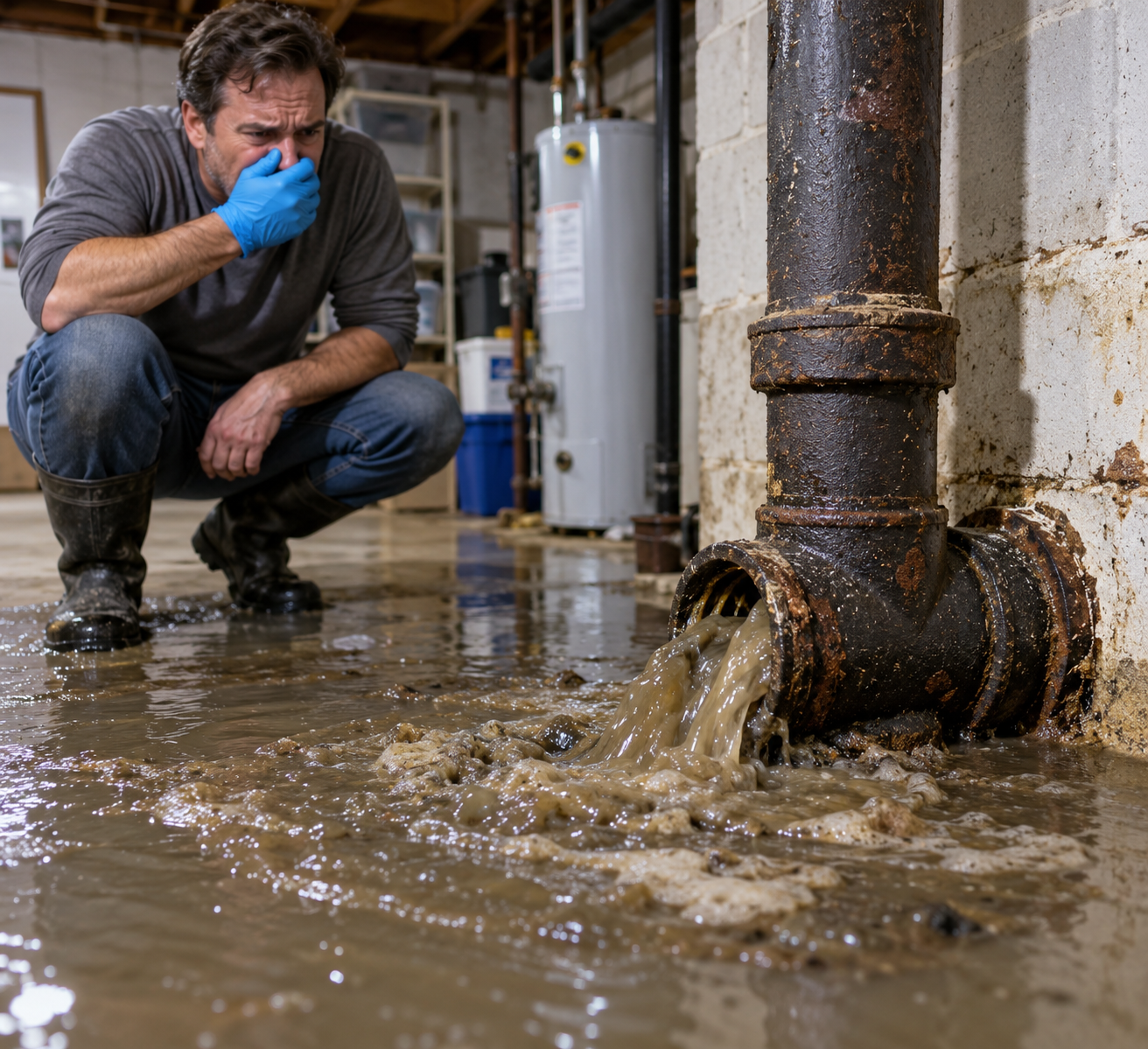
Sewage Backing Up Into Your House?
SEWAGE BACKING UP? CALL (856) 210-8082 · Phones answered 7 days a week ★★★★★ Sewage Backing Up Into Your House? Here’s What to Do Next. Follow these important safety steps to help protect your family and prevent additional damage. Get the FREE Emergency Sewer Backup Checklist and request help from a local sewer professional. 2,800+ five-star reviews from South Jersey homeowners Phones answered & fast response — 7 days a week Serving Gloucester, Camden & Burlington Counties Call (856) 210-8082 Download FREE Checklist The checklist is free and instant. No email needed. Request Sewer Backup Service Tell us what’s happening. If sewage is entering your home right now, call us directly. Submitting this form is a request for service and does not mean a technician has been dispatched. For immediate help, call (856) 210-8082. ★ 2,800+ Five-Star ReviewsTrusted across South Jersey Phones Answered 7 Days a WeekReal people, fast response Gloucester, Camden & BurlingtonSouthern New Jersey Do These 6 Things Right Now Sewer backups can be unsafe. These steps help protect your family while you get help. Immediate danger? If sewage is rising rapidly, electrical equipment is under water, or anyone’s safety is at risk, move to safety and call 911. 1 Stop using water immediately Don’t flush toilets, run showers, use sinks, or run the washing machine or dishwasher. More wastewater can make the backup worse. 2 Keep people and pets away Sewage can contain harmful microorganisms. Keep children and pets out of the affected area and avoid direct contact with contaminated water or materials. 3 Watch for electrical hazards Stay away from standing water near outlets, appliances, wiring or electrical panels. Never enter contaminated water to reach a breaker. If you can’t safely shut off power from a dry location, contact qualified emergency personnel. 4 Don’t attempt risky DIY repairs Avoid chemical drain cleaners, opening backed-up sewer cleanouts, or taking apart drain piping. A pressurized or blocked line can release even more wastewater. 5 Request professional sewer help Call a sewer service contractor and tell them where sewage is appearing, when it started, whether more than one fixture is affected, and whether wastewater is still entering the house. If you suspect a public sewer problem, contact your local sewer utility too. 6 Document damage from a safe spot Take photos and note affected rooms, flooring and belongings without entering contaminated water. Ask your insurer about coverage and arrange professional cleanup and disinfection. These recommendations are based on public guidance from the EPA and CDC on avoiding sewage exposure, limiting wastewater use and avoiding flood-related electrical hazards. Need a Sewer Pro? Request Service Now. Call us now or send a quick service request. We answer the phone and respond fast, 7 days a week. Call (856) 210-8082 Request Sewer Backup Service FREE Emergency Sewer Backup Checklist One page. Six immediate steps. Open it on your phone or print it. No email required. Download the FREE Checklist What Could Be Causing the Backup? Finding the real cause is the key to fixing it for good. Tree Roots Roots grow into sewer lines through small cracks and joints and block the flow. Blockages Grease, wipes, debris and buildup can clog the main line. Damaged Pipes Cracked, broken or offset sections let waste back up. Collapsed Lines Older or deteriorated sewer pipes can collapse and stop flow. Municipal Sewer Problems Sometimes the issue is in the public sewer. We can help you tell the difference. What Happens When We Arrive? A clear process, so you know what to expect. 1 Assessment We ask the right questions and look at what’s happening in your home. 2 Camera Inspection When needed, a sewer camera shows exactly what’s causing the backup. 3 Clearing the Blockage We remove the obstruction to restore flow. 4 Repair or Replacement Options If the line is damaged, we explain your options clearly before any work begins. Call (856) 210-8082 ★★★★★ 2,800+ Five-Star Reviews South Jersey homeowners trust Professor Gatsby’s because we pick up the phone, show up fast and fix it right — 7 days a week. Call (856) 210-8082 Sewer Service Across Southern New Jersey Licensed NJ master plumbers close to you, which means faster arrival times. Gloucester County Williamstown, Washington Twp., Glassboro, Woodbury, Deptford & nearby Camden County Berlin, Cherry Hill, Voorhees, Pine Hill, Gloucester Twp. & nearby Burlington County Mount Laurel, Marlton, Medford, Moorestown & nearby Don’t Wait for the Backup to Get Worse Call now or request service online. We respond fast, 7 days a week. Call (856) 210-8082 Request Sewer Backup Service Professor Gatsby’s Home Sewer Camera Inspections Sewer Line Repair Trenchless Sewer Repair Hydro Jetting Professor Gatsby’s Heating, Cooling, Plumbing & Electrical — Southern New Jersey 📞 Call Now (856) 210-8082
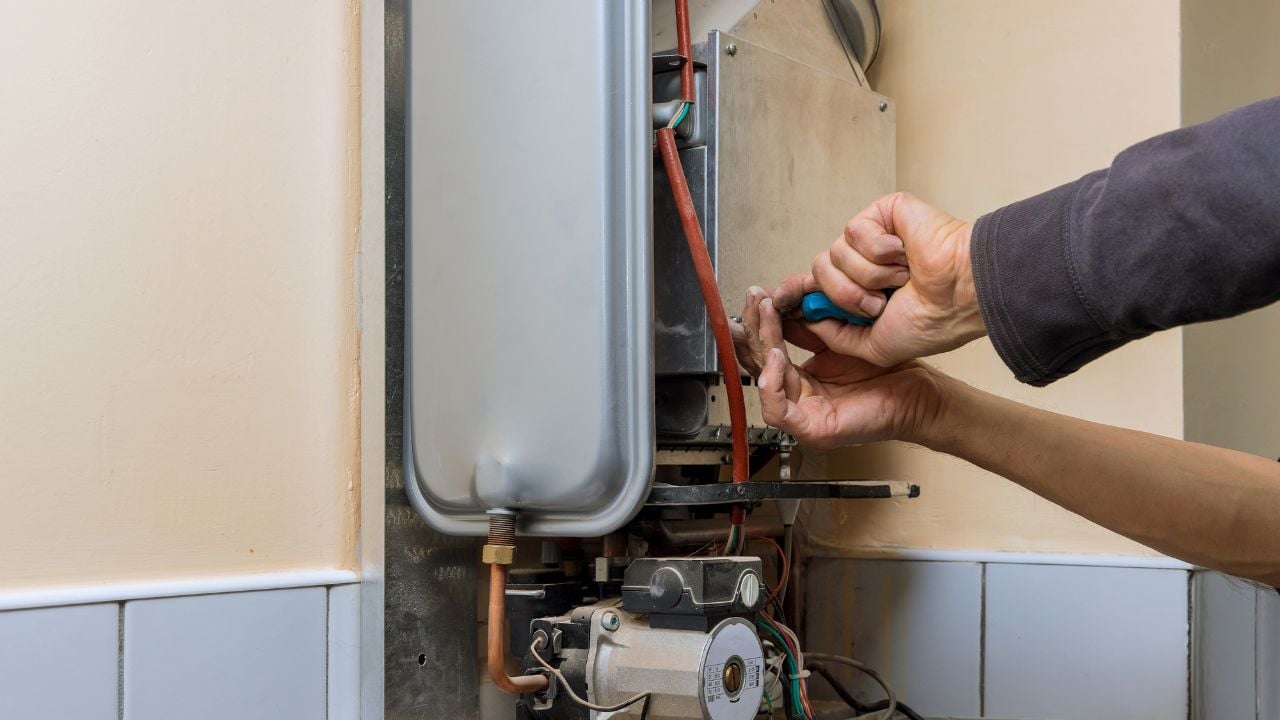
Tankless Water Heaters: How to Size the Right Unit for Your Home
The single most common mistake homeowners make when switching to tankless isn’t choosing the wrong brand — it’s choosing the wrong size. An undersized unit means fighting for hot water the moment a second shower or the dishwasher kicks on. An oversized unit means paying more upfront and, in the case of electric models, potentially triggering an expensive electrical panel upgrade you didn’t actually need. Getting the size right is what determines whether you love your tankless system or regret the switch. If you’re a homeowner in Egg Harbor Township, Mullica Township, or Pine Hill weighing a tankless upgrade, here’s how sizing actually works, what real brands and models look like at each size tier, and what you should realistically expect to pay — for both gas and electric. How Tankless Sizing Actually Works Unlike a tank water heater, which is sized by storage capacity (gallons), a tankless unit is sized by flow rate — how many gallons per minute (GPM) it can heat continuously — combined with temperature rise, which is how many degrees the unit needs to raise the incoming water temperature to reach your desired output. Temperature rise matters more in South Jersey than sizing guides written for warmer climates suggest. Groundwater here runs cold in the winter — often in the 40s°F — meaning a unit needs to achieve roughly a 60-70°F temperature rise to deliver a comfortable 110-120°F at the tap. A unit that performs beautifully in a warm-climate sizing example may deliver noticeably less usable flow once winter groundwater hits it here. The basic method: add up the flow rate of every fixture likely to run at the same time during your household’s busiest moment, then size a unit that can hit that combined GPM at your winter temperature rise. Typical fixture flow rates: Shower: 2.0–2.5 GPM Kitchen sink: 1.5–2.0 GPM Bathroom sink: 1.0 GPM Dishwasher: ~1.5 GPM Washing machine (hot cycle): ~1.5–2.0 GPM Two showers running at once, for example, already puts you at 4-5 GPM before anyone touches a faucet. Sizing by Household — Quick Reference Household Typical Peak Demand Gas Unit Size Electric Unit Size 1–2 people, 1 bath 2.5–4 GPM ~150,000 BTU 18–24 kW 2–3 people, 2 baths 4–6 GPM 150,000–180,000 BTU 24–27 kW Family of 4, 2.5 baths 5–7 GPM 180,000–199,000 BTU 27–36 kW Larger home, 3+ baths 7–11 GPM 199,000 BTU (may need 2 units) Electric often impractical at this tier For larger South Jersey homes needing 9+ GPM in winter, electric tankless becomes a hard sell — even a top-tier 36 kW electric unit tops out around 7 GPM under cold-climate conditions, and simultaneous high-demand use (two showers plus a dishwasher) is where electric units in this climate genuinely struggle. Gas is almost always the more realistic whole-home option for larger South Jersey households; electric tends to make the most sense for smaller households, point-of-use applications, or homes without gas service at all. Gas Tankless: Brands, Models, and Sizes Gas tankless dominates the whole-home market, and for good reason — higher flow rates and better cold-climate performance than electric. Brand Model Tier Approx. Flow Rate Unit Price Range Rinnai RL75i ~7.5 GPM $900–$1,400 Rinnai RL94i ~9.4 GPM $1,200–$1,700 Rinnai RU199iN Up to ~11 GPM (199,000 BTU) $1,500–$1,995 Navien NPE-180A2 ~7.5 GPM $1,075–$1,500 Navien NPE-210A2 ~8.6 GPM $1,300–$1,900 Navien NPE-240A2 ~11.2 GPM $1,800–$2,500 Rheem Performance Platinum series ~7–9 GPM $670–$1,500 Rheem RTGH condensing series ~9–11 GPM $1,200–$1,950 Bradford White Infiniti series ~7–10 GPM $1,000–$1,500 Noritz NR series 9–11+ GPM (commercial-capable) $1,300–$2,200 A note on brand differences: the equipment price gap between these brands is generally a few hundred dollars at most — the bigger cost driver is almost always your home’s specific venting and gas line situation, not which nameplate is on the unit. Rinnai and Navien dominate residential installs and both have strong service-network availability; Noritz is worth considering specifically if your household’s peak demand pushes toward the 11+ GPM range, since it’s built to handle higher-flow and multi-bathroom scenarios other brands sometimes require two units for. Electric Tankless: Brands, Models, and Sizes Electric tankless makes the most sense for smaller households, homes without gas service, or as a point-of-use solution for a single fixture rather than whole-home coverage. Point-of-use (single fixture) models: Brand Model Output Unit Price Range Rheem RTEX-08 8 kW $180–$250 Rheem RTEX-06T 6.5 kW $150–$220 Rheem RTEX-13 13 kW $250–$300 EcoSmart ECO 11 13 kW $200–$280 Stiebel Eltron Tempra 12 Plus 12 kW $350–$450 Bosch Tronic 3000T 7.2 kW $200–$280 Whole-home models: Brand Model Output Approx. Flow Rate Unit Price Range Rheem RTEX-24 24 kW ~4.1 GPM (moderate climate) $400–$550 Rheem RTEX-36 36 kW ~6–7 GPM $500–$700 EcoSmart ECO 27 27 kW ~4–5 GPM $400–$500 Stiebel Eltron Tempra 29 Plus 29 kW ~5 GPM $500–$650 Stiebel Eltron Tempra 36 Plus 36 kW ~7 GPM $650–$850 The electrical panel is the real constraint, not the unit itself. A 36 kW whole-home electric unit typically needs roughly 150 dedicated amps at 240V — more available capacity than most panels installed before 2000 have to spare. If your panel is older or already near capacity, budget for a panel upgrade as a real possibility, not an edge case, before committing to whole-home electric tankless. Installed Cost: Unit + Labor This is where the real budgeting happens, since the unit itself is typically only 30-50% of the total installed cost. Gas tankless — typical installed totals: Basic swap (existing gas line and venting adequate, 1-2 bath home): $1,800–$3,200 Moderate complexity (some venting or gas line work, 2-3 bath home): $3,000–$4,800 Larger home, extended venting, gas line upgrade: $5,500–$8,000 Labor alone typically runs $600–$2,500, with installs taking roughly 6-14 hours depending on venting complexity and whether the gas line needs to be upsized. A 199,000 BTU unit often requires a minimum 3/4-inch gas line for short runs, and a full 1-inch line on longer runs to maintain proper pressure — this is one of the most common reasons a gas tankless quote comes in higher than expected.
Hot Water Heater Leaking? Here’s What to Do Right Now
You’ve just noticed water pooling around your hot water heater, and the first question isn’t “why is this happening” — it’s “what do I do in the next five minutes.” That’s a fair instinct. A leaking water heater can range from a minor drip that waits until tomorrow to an active flood risk that needs attention immediately, and knowing which situation you’re in changes what you should do right now, not after you’ve researched the cause. If you’re a homeowner in Clayton, Lawnside, or Buena standing next to a leaking water heater at this moment, here’s exactly what to do, in order. Get My Water Heater Repaired Step 1: Shut Off the Power or Gas to the Unit This is the first move, before you touch anything else, and it matters for two different reasons depending on your unit type. For electric water heaters: Go to your electrical panel and switch off the breaker labeled for the water heater. Water and live electrical components are a serious combination, and cutting power protects both you and the unit while you assess the situation. For gas water heaters: Turn the gas control valve on the unit itself to the “off” position. If you smell gas in addition to seeing water — a distinct sulfur or “rotten egg” odor — stop what you’re doing, leave the house immediately, and call your gas utility’s emergency line or 911 before doing anything else. A water leak and a gas smell together is not a situation to keep investigating on your own. Step 2: Shut Off the Water Supply Locate the cold water shut-off valve on top of the unit (or on the pipe leading into it) and turn it fully off. This stops new water from feeding into the tank and limits how much worse the leak can get while you figure out next steps. If you can’t find or reach this valve, or it won’t turn, shutting off your home’s main water supply valve is the next-best option. Step 3: Protect the Surrounding Area Once the power and water are addressed, focus on limiting damage. Move anything nearby — stored boxes, furniture, electronics — away from the water. If you have towels or a wet/dry vacuum on hand, this is the time to use them, but don’t spend excessive time on cleanup before completing the first two steps; standing water is a secondary concern compared to power and gas safety. Step 4: Assess How Bad It Actually Is With power and water shut off, you’re no longer in immediate danger, which gives you room to figure out whether this is a same-day emergency or something that can reasonably wait for a scheduled appointment. Signs this needs attention today: Water is actively flowing, not just dripping or pooling slowly The leak is coming directly from the tank body itself, not a fitting or valve You’ve noticed rust-colored water or visible corrosion on the tank The unit is in a finished basement or living space where water damage will be costly You have no other source of hot water in the home and need a fast resolution Signs this can likely wait for a scheduled visit: The leak is a slow, occasional drip You’ve already shut off the water and the dripping has essentially stopped The moisture appears to be condensation rather than an active leak (common with new installations or recent temperature changes) The leak is coming from an isolated fitting or the drain valve, not the tank itself If you’re not sure which category you’re in, that uncertainty is itself a reason to call rather than guess — a quick phone description to a licensed plumber can usually clarify whether you need someone today or can schedule for tomorrow. What’s Likely Causing It (Briefly) Once the immediate situation is handled, you’ll naturally want to know why this happened. In short: it’s usually tank corrosion (which typically means the tank has reached the end of its life and needs replacement), a loose or failing fitting (often a straightforward repair), a failing pressure relief valve, a leaking drain valve, or in some cases just condensation rather than an actual leak. We cover all five of these in detail — including how to tell them apart and what each one means for repair versus replacement — in our full guide, Why Is My Water Heater Leaking? 5 Possible Causes (and What to Do Next). That’s the right next read once the immediate situation is stable and you want to understand what’s actually happening inside the unit. Professor Gatsby’s Plumbers What to Expect When a Plumber Arrives Once you’ve called, it helps to know roughly what happens next. A technician will typically confirm the leak’s source first — tank, fitting, or valve — since that determines everything else about the visit. If the leak is repairable (a fitting or valve issue), it’s often resolved in that same visit. If the tank itself is the source, the technician will walk you through replacement options rather than attempting a repair that won’t actually hold, since a corroded tank cannot be sealed or patched in any lasting way. Having already shut off power and water before they arrive genuinely speeds this up — it means the technician can go straight to diagnosis instead of dealing with an active leak first. The Pain Point: Standing Water Doesn’t Wait for a Convenient Time Here’s why acting immediately matters even if the leak looks minor: water left sitting — especially in a finished basement, near electrical outlets, or against drywall and flooring — causes damage that compounds by the hour, not just by the day. What looks like a small, manageable puddle now can mean warped flooring, damaged drywall, or mold development if it’s not addressed quickly. The five minutes it takes to shut off power and water is the single most effective thing you can do to limit that damage before help arrives, regardless of what’s ultimately causing the leak. Let Professor
Drain Cleaning Services in Pine Hill, NJ: What to Know Before You Call
Schedule My Drain Service Today! A clogged drain in Pine Hill rarely happens at a convenient time. Whether it’s a slow kitchen sink in a Bromley Estates home or a full backup in an older house near the borough center, most homeowners end up calling for help without really knowing what to expect — how the service works, what it costs, or whether the problem they’re describing is a quick fix or something bigger. Knowing the basics before you call can save you time, help you describe the problem accurately, and set realistic expectations for what happens next. Pine Hill’s Housing Stock Plays a Role Pine Hill was incorporated in 1929, and like a lot of established Camden County boroughs, that means a meaningful share of homes here were built decades before modern PVC piping became standard. Older clay, cast iron, or transitional pipe materials are more common in these homes, and they behave differently than newer plumbing when it comes to clogs — they’re more prone to buildup, joint separation, and in some cases root intrusion from mature trees near the property line. This doesn’t mean every clog in Pine Hill West is a bigger problem in disguise, but it does mean the “why” behind a clog is worth understanding, not just the “how do I clear it.” Not Every Clog Needs the Same Fix One of the most common misconceptions homeowners have is that all drain cleaning is basically the same service. It isn’t. A single slow bathroom sink is usually a contained, fixture-level issue that a straightforward snaking visit resolves in one trip. But if multiple fixtures are backing up at once — or if the same drain keeps clogging every few months no matter how many times it’s cleared — that’s a different situation entirely, often pointing to a main line issue or buildup that a simple snake can’t fully resolve. We cover this distinction in detail in our guide to main line clogs vs. single drain clogs, which walks through exactly how to tell which one you’re dealing with before you even call. Snaking vs. Hydro Jetting: Two Different Tools for Two Different Problems When you call for drain cleaning, you may be offered either snaking or hydro jetting, and the two aren’t interchangeable. Snaking is fast and effective for a straightforward, isolated clog. Hydro jetting uses high-pressure water to scour the full interior of the pipe, which matters most for Pine Hill’s older homes, where years of grease, mineral scale, or root growth have coated the pipe walls rather than just formed a single blockage. Our full breakdown in Hydro-Jetting vs. Snaking: Which Drain Cleaning Method Do You Need? goes through exactly when each one applies — worth a quick read if you want to understand what you’re paying for before a technician arrives. Get My Pipes Unclogged Why the Same Clog Keeps Coming Back If this isn’t the first time you’ve dealt with this exact drain, that’s important information — not just an annoyance. A clog that returns in the same spot repeatedly is often a sign of something a basic clearing visit won’t permanently fix: buildup coating the pipe walls, a bellied section of pipe, or root intrusion that regrows after being cut back. We cover the most common causes in Why Your Drain Keeps Clogging (Even After You Clear It) — if this sounds familiar, it’s worth mentioning to whoever you call, since it changes what kind of visit actually solves the problem. Older Trees, Older Pipes: A Pine Hill-Specific Consideration Established residential streets with mature trees are part of what makes a lot of Pine Hill so appealing — but as we cover in How Tree Roots Get Into Your Drain Pipes, those same trees are a common cause of sewer line problems in older neighborhoods throughout Camden County. If you’re noticing recurring clogs alongside gurgling drains or a suspiciously green patch in the yard, root intrusion is worth ruling out with a camera inspection rather than guessing. What to Expect on Cost and Timing Every home is different, and pricing depends on the type of clog, the method needed, and how accessible the affected line is — but a straightforward, single-fixture drain cleaning visit is typically a same-day service, not a multi-day wait. Our Berlin, NJ location is a short drive from Pine Hill — most homes in the borough are reachable in around 15 minutes — so same-day and emergency drain cleaning requests are usually realistic, not just a marketing promise. Is It Urgent, or Can It Wait? A single slow drain that’s still functioning, even sluggishly, can usually wait for a scheduled appointment. But a few signs mean it’s worth calling right away rather than waiting: water backing up out of a floor drain, multiple fixtures affected at once, or a toilet that won’t stop gurgling when other water runs. These are signs the issue may be at the main line level, and letting it sit increases the risk of a full backup — which is always more disruptive and more expensive to clean up than the clog itself. The Pain Point: Guessing Delays the Real Fix Here’s what tends to happen when homeowners try to power through a recurring or worsening clog without professional help: a plunger or a bottle of chemical cleaner buys a few days of relief, the underlying cause keeps developing in the background, and by the time the real problem shows up — a full backup, a flooded basement, water damage to flooring or drywall — it’s a significantly bigger and more expensive job than if it had been addressed properly the first time. Pine Hill’s older pipe materials make this pattern especially common, which is exactly why understanding what’s actually happening in the line matters more here than in newer construction. Related Reading If you want a deeper dive before you call, a few more of our guides may help: our complete guide to drain clogs by fixture type if
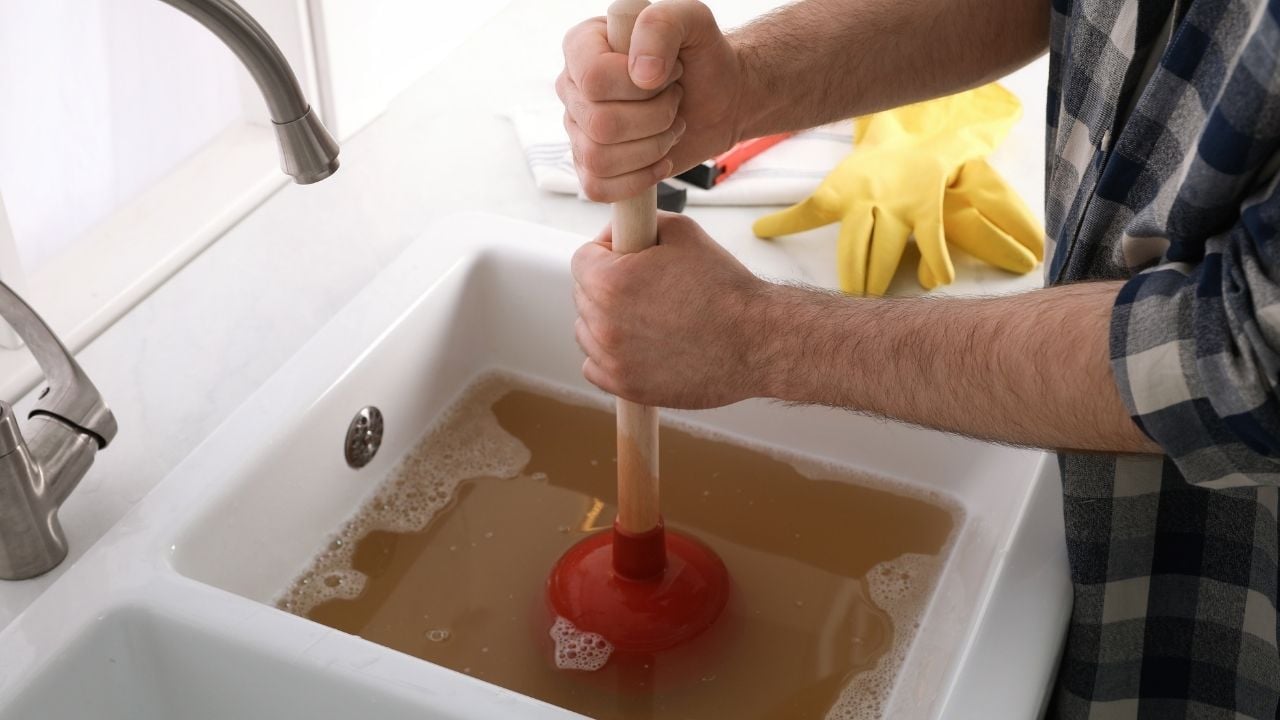
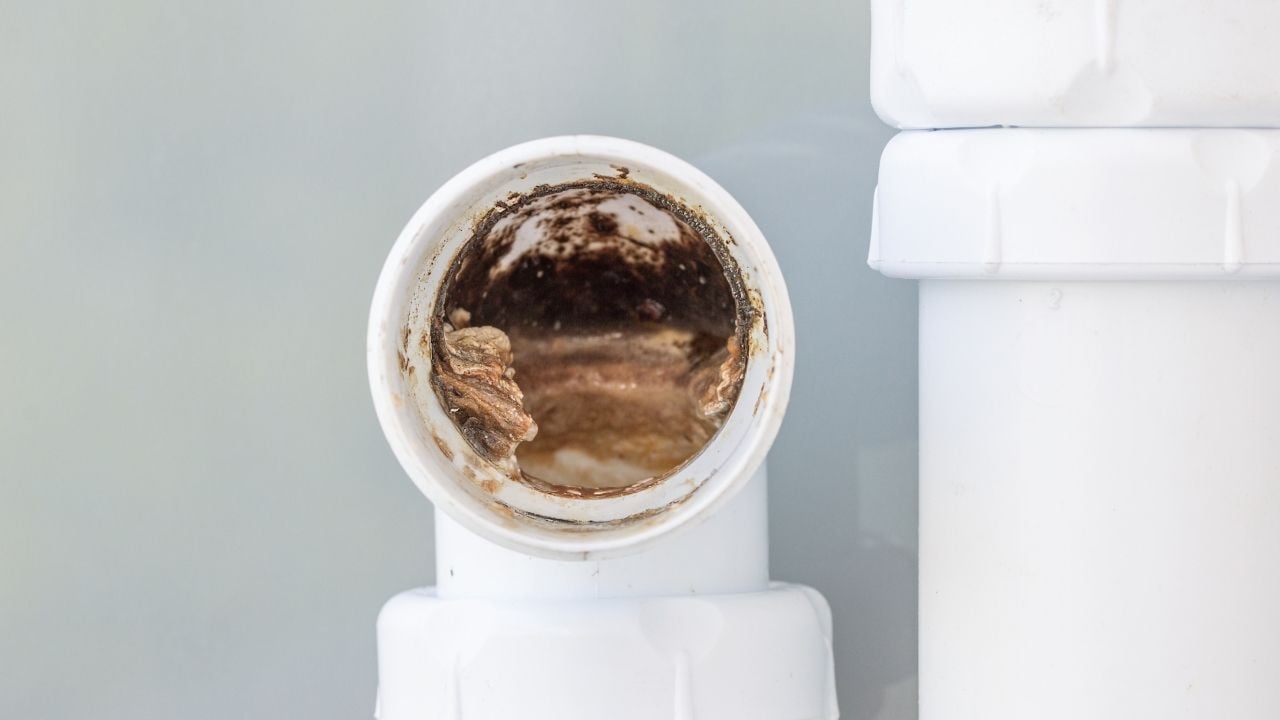
Why Your Drain Keeps Clogging (Even After You Clear It)
There’s a specific kind of frustration that comes with clearing a clogged drain, feeling relieved it’s finally handled, and then watching the exact same problem come back a few weeks later. If this sounds familiar, you’re not doing anything wrong with your clearing method necessarily — you’re likely dealing with an underlying cause that a surface-level fix was never going to solve in the first place. If you’re a homeowner in Pennsville, Mantua, or Washington Township stuck in this cycle, here’s what’s actually causing recurring clogs, and why “clearing” a drain isn’t always the same as fixing it. Buildup Coating the Pipe Walls This is the most common reason a clog keeps returning. When a clog is cleared with a plunger, a basic snake, or a chemical cleaner, what often happens is that a channel gets opened through the blockage — but grease, soap scum, and mineral scale coating the rest of the pipe’s interior surface stays right where it is. That coating doesn’t just sit there passively; it continues trapping new debris every time water flows through, narrowing the effective diameter of the pipe a little more each time. Why a quick fix doesn’t solve it: Clearing the immediate blockage restores flow temporarily, but it doesn’t address the layer of buildup that caused the pipe to narrow in the first place. The clog you “fixed” was really just the point where buildup finally became severe enough to fully block the pipe — and that buildup is still there, ready to narrow the pipe again. Bellied (Sagging) Pipes A “belly” in a pipe is a low spot that’s formed due to settling soil, poor original installation, or age — instead of maintaining a consistent downward slope toward the sewer connection, the pipe dips and then rises again, creating a section where water and debris collect rather than flowing straight through. Why a quick fix doesn’t solve it: A belly is a structural issue, not a debris issue. Snaking or jetting can clear whatever has accumulated in the low spot at that moment, but because the physical dip in the pipe remains, debris will continue settling in that same spot every time. This is one of the clearest cases where repeat clogs in the exact same location, over and over, point to something a cleaning method alone can never permanently fix — the pipe itself may need to be repaired or replaced to correct the slope. Root Intrusion Tree roots are drawn to the moisture and nutrients inside sewer and drain pipes, and once a root finds its way in through a cracked joint or aging pipe material, it doesn’t stop growing. Roots can be cut back with a mechanical auger equipped with a cutting head, temporarily restoring flow. Why a quick fix doesn’t solve it: Cutting roots back is a temporary measure, not a permanent one — the root system is still alive underground, and it typically regrows into the same opening within months. Homeowners who deal with the “same clog” every six months to a year, particularly in older, tree-lined South Jersey neighborhoods, are very often dealing with root regrowth rather than a new, unrelated problem each time. Offset or Misaligned Pipe Joints Over time — through soil movement, ground settling, or simply aging materials — pipe joints can shift slightly out of alignment. Even a small offset creates a ledge or lip inside the pipe where debris catches instead of flowing smoothly past. Why a quick fix doesn’t solve it: Similar to a bellied pipe, this is a physical, structural issue rather than a debris problem. Clearing whatever has built up at the offset joint provides temporary relief, but the ledge causing debris to catch in the first place is still there, waiting to catch the next round of buildup. Incorrect Pipe Pitch Drain and sewer pipes are designed to be installed at a specific slope — enough to keep wastewater and solids moving efficiently toward the sewer connection, but not so steep that water outpaces solid waste and leaves it behind. A pipe installed with too little pitch (or, less commonly, one that’s changed pitch due to settling) doesn’t move waste efficiently, leading to repeated buildup even in an otherwise undamaged pipe. Why a quick fix doesn’t solve it: This is a design or installation issue that clearing tools have no ability to correct. A pipe with inadequate pitch will continue collecting debris at a faster-than-normal rate no matter how often it’s cleared, until the pitch problem itself is addressed. Recurring Habits That Reintroduce the Problem Sometimes recurring clogs aren’t a structural issue at all — they’re a sign that whatever caused the original clog is still happening. Grease still going down the kitchen sink, a garbage disposal still being used for fibrous or starchy scraps it can’t handle, or a household member still not using a hair catcher in the shower can all reintroduce the exact same buildup that was just cleared. Why a quick fix doesn’t solve it: In this case, the clearing method isn’t the problem — the ongoing habit is. No amount of professional clearing prevents a clog from returning if the same material keeps going down the same drain in the same way. How to Tell Which Cause You’re Dealing With The pattern of your recurring clog is actually a useful diagnostic clue. A clog that returns in the exact same location every time often points to a structural issue — a belly, an offset joint, or root intrusion. A clog that seems to move around, or that returns gradually over months rather than suddenly, is more consistent with buildup coating the pipe walls. And a clog that returns quickly after clearing, tied to a specific kitchen or bathroom habit, may simply need a change in what’s going down the drain rather than a pipe repair at all. The honest answer is that most homeowners can’t reliably tell these apart without a closer look — which is exactly what a camera