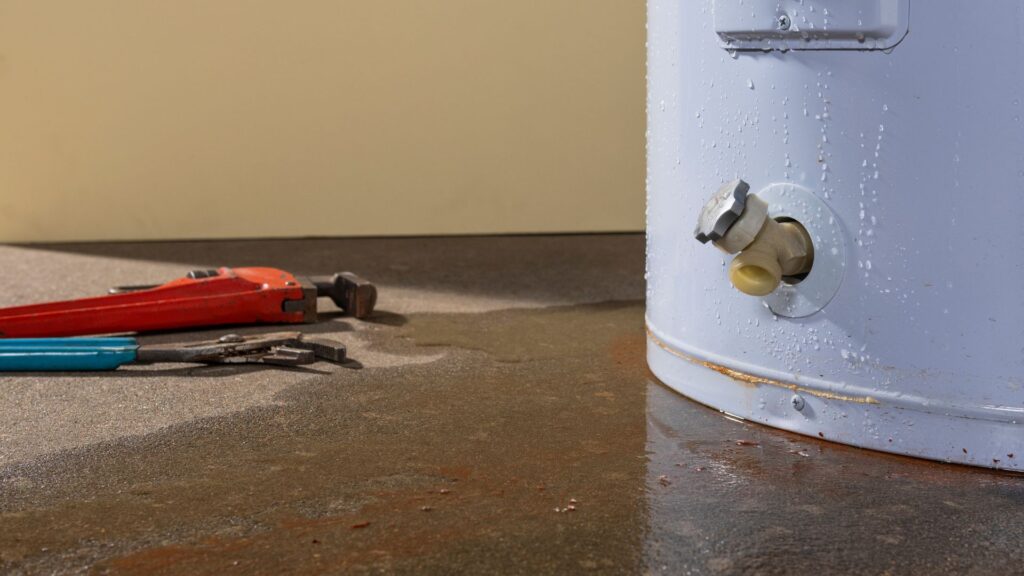
You’ve just noticed water pooling around your hot water heater, and the first question isn’t “why is this happening” — it’s “what do I do in the next five minutes.” That’s a fair instinct. A leaking water heater can range from a minor drip that waits until tomorrow to an active flood risk that needs attention immediately, and knowing which situation you’re in changes what you should do right now, not after you’ve researched the cause.
If you’re a homeowner in Clayton, Lawnside, or Buena standing next to a leaking water heater at this moment, here’s exactly what to do, in order.
Step 1: Shut Off the Power or Gas to the Unit
This is the first move, before you touch anything else, and it matters for two different reasons depending on your unit type.
For electric water heaters: Go to your electrical panel and switch off the breaker labeled for the water heater. Water and live electrical components are a serious combination, and cutting power protects both you and the unit while you assess the situation.
For gas water heaters: Turn the gas control valve on the unit itself to the “off” position. If you smell gas in addition to seeing water — a distinct sulfur or “rotten egg” odor — stop what you’re doing, leave the house immediately, and call your gas utility’s emergency line or 911 before doing anything else. A water leak and a gas smell together is not a situation to keep investigating on your own.
Step 2: Shut Off the Water Supply
Locate the cold water shut-off valve on top of the unit (or on the pipe leading into it) and turn it fully off. This stops new water from feeding into the tank and limits how much worse the leak can get while you figure out next steps. If you can’t find or reach this valve, or it won’t turn, shutting off your home’s main water supply valve is the next-best option.
Step 3: Protect the Surrounding Area
Once the power and water are addressed, focus on limiting damage. Move anything nearby — stored boxes, furniture, electronics — away from the water. If you have towels or a wet/dry vacuum on hand, this is the time to use them, but don’t spend excessive time on cleanup before completing the first two steps; standing water is a secondary concern compared to power and gas safety.
Step 4: Assess How Bad It Actually Is
With power and water shut off, you’re no longer in immediate danger, which gives you room to figure out whether this is a same-day emergency or something that can reasonably wait for a scheduled appointment.
Signs this needs attention today:
- Water is actively flowing, not just dripping or pooling slowly
- The leak is coming directly from the tank body itself, not a fitting or valve
- You’ve noticed rust-colored water or visible corrosion on the tank
- The unit is in a finished basement or living space where water damage will be costly
- You have no other source of hot water in the home and need a fast resolution
Signs this can likely wait for a scheduled visit:
- The leak is a slow, occasional drip
- You’ve already shut off the water and the dripping has essentially stopped
- The moisture appears to be condensation rather than an active leak (common with new installations or recent temperature changes)
- The leak is coming from an isolated fitting or the drain valve, not the tank itself
If you’re not sure which category you’re in, that uncertainty is itself a reason to call rather than guess — a quick phone description to a licensed plumber can usually clarify whether you need someone today or can schedule for tomorrow.
What’s Likely Causing It (Briefly)
Once the immediate situation is handled, you’ll naturally want to know why this happened. In short: it’s usually tank corrosion (which typically means the tank has reached the end of its life and needs replacement), a loose or failing fitting (often a straightforward repair), a failing pressure relief valve, a leaking drain valve, or in some cases just condensation rather than an actual leak. We cover all five of these in detail — including how to tell them apart and what each one means for repair versus replacement — in our full guide, Why Is My Water Heater Leaking? 5 Possible Causes (and What to Do Next). That’s the right next read once the immediate situation is stable and you want to understand what’s actually happening inside the unit.

What to Expect When a Plumber Arrives
Once you’ve called, it helps to know roughly what happens next. A technician will typically confirm the leak’s source first — tank, fitting, or valve — since that determines everything else about the visit. If the leak is repairable (a fitting or valve issue), it’s often resolved in that same visit. If the tank itself is the source, the technician will walk you through replacement options rather than attempting a repair that won’t actually hold, since a corroded tank cannot be sealed or patched in any lasting way.
Having already shut off power and water before they arrive genuinely speeds this up — it means the technician can go straight to diagnosis instead of dealing with an active leak first.
The Pain Point: Standing Water Doesn’t Wait for a Convenient Time
Here’s why acting immediately matters even if the leak looks minor: water left sitting — especially in a finished basement, near electrical outlets, or against drywall and flooring — causes damage that compounds by the hour, not just by the day. What looks like a small, manageable puddle now can mean warped flooring, damaged drywall, or mold development if it’s not addressed quickly. The five minutes it takes to shut off power and water is the single most effective thing you can do to limit that damage before help arrives, regardless of what’s ultimately causing the leak.
Let Professor Gatsby’s Respond Fast
If you’re dealing with a leaking water heater right now, our licensed plumbers serve homeowners throughout South Jersey area, with same-day response for active leaks. We’ll quickly diagnose whether you need a water heater repair or a full water heater replacement, and get your hot water back safely.
Water heater leaking right now? Contact Professor Gatsby’s or book an appointment online — shut off the power and water first, then reach out and we’ll take it from there.
3 South Jersey Locations to Serve You