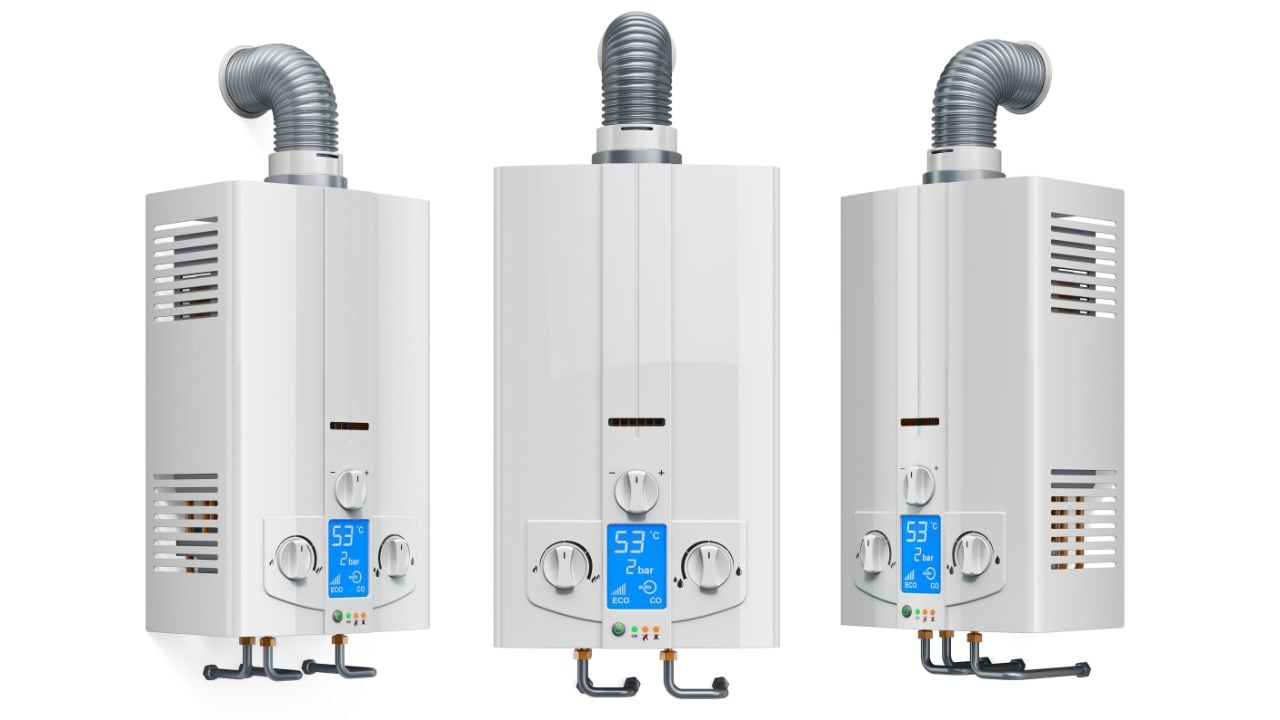
Tankless water heaters deliver real advantages — continuous hot water, a longer lifespan, and better long-term efficiency. But “better” doesn’t automatically mean “drop-in replacement.” Because tankless units work fundamentally differently than a traditional tank, some homes need upgrades to their gas line, venting, or electrical setup before a tankless system can perform the way it’s supposed to. Knowing what to check before you request a quote can save you from sticker shock — or help you walk in already prepared for what the upgrade will involve.
If you’re a homeowner in Mount Holly, Lumberton, or Medford Lakes considering the switch, here’s what actually determines whether your home is tankless-ready.
Gas Line Sizing
This is the single most common upgrade required when switching to a gas tankless unit, and it’s worth understanding why. Tankless water heaters generate heat on demand, which means they draw a significantly higher gas flow rate (measured in BTUs) at any given moment compared to a traditional tank, which heats water gradually and stores it.
Many homes plumbed for a standard tank water heater have a gas line sized adequately for that unit’s lower, steady demand — but undersized for a tankless unit’s higher peak demand. If the existing gas line isn’t large enough, the tankless unit won’t be able to draw enough fuel to perform at its rated capacity, which can result in inconsistent water temperature or the unit failing to keep up with demand entirely.
What to check: Ask whether your home’s gas meter and the line running to the water heater location have been sized for a tankless unit’s BTU requirements — this is something a licensed plumber can assess quickly, but it’s rarely something a homeowner can accurately judge on their own.
Venting Requirements
Tankless water heaters vent differently than traditional tank units, and the venting type required depends on the specific model and its efficiency rating. Many tankless units use PVC or specialized venting material rather than the metal venting common with standard tank units, and they often require a dedicated vent run to the exterior of the home, sometimes through a wall rather than up through an existing chimney.
What to check: Consider where the unit will be installed relative to an exterior wall, whether the existing vent path (if replacing a tank unit in the same location) is compatible with tankless venting requirements, and whether your home’s layout allows for a reasonably direct vent run. Homes with the water heater located in an interior space far from an exterior wall may face more significant venting work than homes with the unit already near an outside wall.
Simultaneous Hot Water Demand
One of tankless’s biggest selling points — continuous hot water — depends entirely on correct sizing for your household’s peak usage. Tankless units are rated by flow rate (gallons per minute, or GPM) rather than storage capacity, and if your household regularly runs multiple hot water fixtures at once — a shower, the dishwasher, and a load of laundry, for example — the unit needs to be sized to handle that combined demand without a drop in temperature or pressure.
What to check: Think through your household’s actual peak usage patterns, not just average day-to-day use. A single-person household with staggered hot water use has very different requirements than a family of five all getting ready in the same 45-minute window. This directly determines what size (or whether multiple units) your home actually needs.
Electrical Requirements
Even gas tankless units typically require an electrical connection to power their ignition system and internal controls — this is different from a standard tank with a continuous pilot light, which may not need electrical power to function at all. Most tankless units need a standard 120V outlet near the installation location, which is a minor requirement for most homes but worth confirming isn’t a gap, particularly in older utility spaces that may not have a nearby outlet.
What to check: Confirm there’s an accessible power outlet near the planned installation location, or budget for adding one as part of the installation.
Water Quality and Hardness
Tankless units are more sensitive to hard water than traditional tanks, since mineral scale builds up inside the compact heat exchanger faster than sediment would settle in a larger tank. This doesn’t disqualify a home from going tankless, but it does mean homes with notably hard water should plan for more frequent descaling maintenance, and in some cases, a water softening system becomes a worthwhile companion investment to protect the unit and preserve its warranty coverage.
What to check: If you already know your home has hard water, factor annual (or more frequent) descaling into your ongoing maintenance plan from the start rather than treating it as an afterthought.
Available Installation Space
While tankless units are more compact than a storage tank, they still need adequate clearance for safe operation, service access, and code-compliant venting. Tight utility closets built specifically around the dimensions of an old tank unit may need some reconfiguration to accommodate a tankless unit’s mounting and clearance requirements.
What to check: A quick look at the intended installation location — wall space, clearance around the unit, and proximity to gas, water, and electrical connections — helps set realistic expectations before a professional site visit.
The Pain Point: Skipping This Step Leads to Budget Surprises
Here’s why pre-checking these items matters: homeowners who request a tankless quote without any sense of their home’s gas line size, venting path, or peak demand often get blindsided by the total cost once a plumber identifies necessary upgrades on-site. None of these upgrades are unusual or a sign something’s wrong with your home — they’re simply part of what a tankless conversion sometimes requires — but being surprised by them after you’ve mentally committed to a number is a frustrating way to start the project. Understanding these factors upfront means you’re budgeting for the real cost from day one, not discovering it partway through.
Related Reading
If you’re still weighing tankless against sticking with a traditional tank, our full tankless vs. traditional water heaters comparison breaks down the cost and performance trade-offs. And if you’re deciding between brands, our comparison of Rinnai and Navien tankless water heater lifespan and warranty coverage can help you understand what to expect long-term.
Let Professor Gatsby’s Assess Your Home’s Readiness
Every home’s gas line, venting path, and hot water demand are different, and the only way to know for certain what your tankless installation will require is a professional evaluation. Our licensed technicians serve homeowners throughout Mount Holly, Lumberton, Medford Lakes, and the surrounding South Jersey area, and we’ll walk your home’s setup with you before providing a clear, honest quote for tankless water heater installation.
Thinking about going tankless? Contact Professor Gatsby’s or book an appointment online for a straightforward assessment of what your home actually needs.
3 South Jersey Locations to Serve You