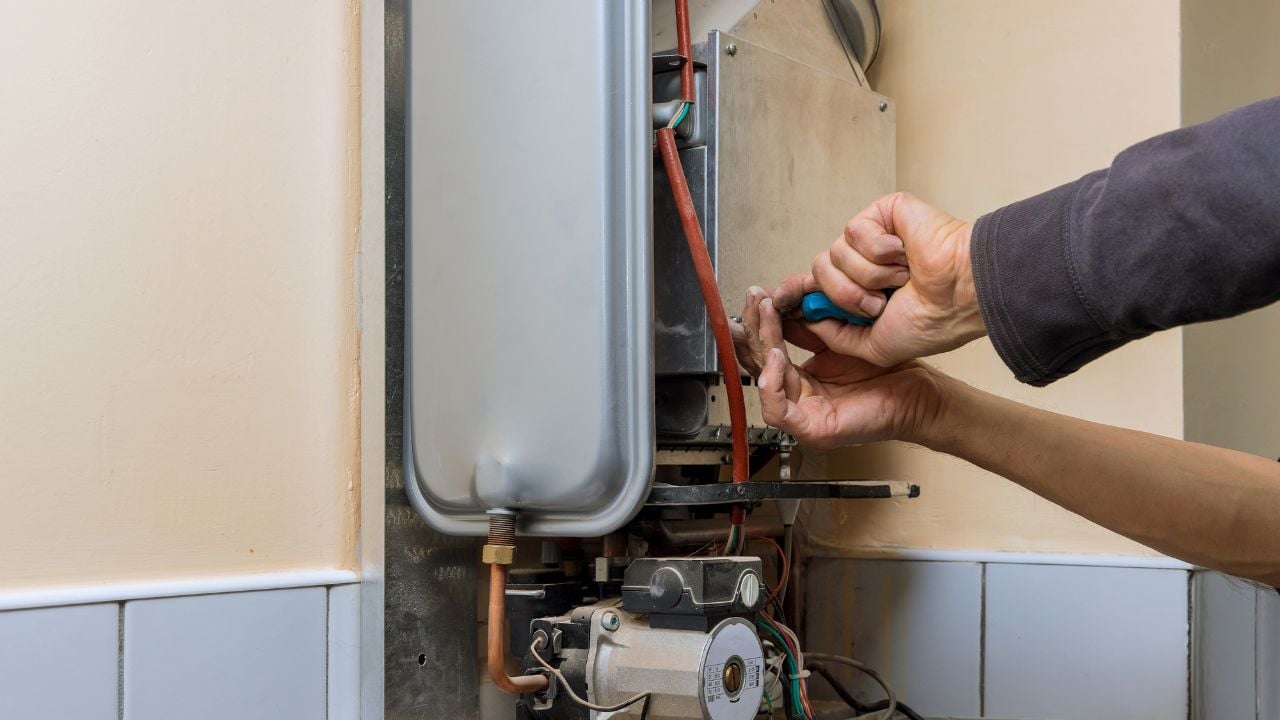
Tankless water heaters are sold on longevity — 15 to 20+ years of continuous hot water, well beyond what a traditional tank typically delivers. But that longevity isn’t automatic. It depends on one maintenance task more than any other: annual descaling. Skip it, and even the best-built tankless unit can lose efficiency, strain its components, and fall well short of its expected lifespan.
If you’re a homeowner in Palmyra, Riverside, or Willingboro with a tankless water heater — or considering installing one — here’s why descaling matters so much more for tankless units than it ever did for a traditional tank.
Why Hard Water Hits Tankless Units Harder
Every water heater deals with mineral content in the water supply, but tankless units are affected differently than traditional tanks. In a standard tank, minerals settle as sediment at the bottom, and while that buildup is a real maintenance concern, the tank’s size gives it some tolerance before performance is significantly affected.
Tankless units work differently. Water passes through a compact heat exchanger, heated directly and rapidly as it flows. That heat exchanger has a much smaller internal surface area than a tank, and it’s exposed to a continuous, high-flow stream of water every time hot water is used. Minerals in the water — primarily calcium and magnesium, the components of what’s commonly called “hard water” — deposit onto the interior of that heat exchanger as scale, gradually narrowing the passages the water flows through.
South Jersey’s water hardness varies by municipality and water source, but many homes across the region deal with moderately hard water, which is exactly the condition that accelerates scale buildup inside a tankless unit’s heat exchanger.
What Scale Buildup Actually Does to the Unit
Scale isn’t just a cosmetic issue — it directly affects how the unit performs and how hard it has to work:
Reduced heat transfer efficiency. Scale acts as an insulating layer between the heat source and the water flowing past it, meaning the unit has to work harder and burn more fuel (or draw more electricity) to deliver the same water temperature.
Restricted water flow. As scale builds up inside the narrow passages of the heat exchanger, it can reduce the unit’s flow rate, leading to lower water pressure or an inability to keep up with simultaneous demand the way it once could.
Increased strain on components. A heat exchanger working harder to compensate for scale buildup experiences more thermal stress over time, which can shorten the life of the component and increase the likelihood of a failure well before the unit’s rated lifespan.
Error codes and shutdowns. Many tankless units are designed to detect flow restrictions or overheating conditions caused by scale and will shut down or display an error code rather than continue operating under stress — meaning a homeowner with a heavily scaled unit may lose hot water entirely, not just experience reduced performance.
What Manufacturers Actually Recommend
This isn’t a maintenance step manufacturers treat as optional. Both Rinnai and Navien recommend annual descaling for most residential installations, and both note that this frequency should increase in areas with harder water. This recommendation exists specifically because scale-related heat exchanger issues are among the most common — and most preventable — problems these manufacturers see in the field.
It’s also worth understanding that heat exchanger warranty claims often require documentation showing recommended maintenance was actually performed. A homeowner who skips descaling for years and then experiences a heat exchanger failure may find that the very component the warranty is meant to protect isn’t covered, because the maintenance requirement that keeps the warranty valid wasn’t met.
What Descaling Actually Involves
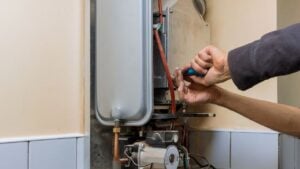
Descaling is a maintenance service that circulates a mild, food-safe descaling solution through the unit’s heat exchanger using isolation valves that are typically installed alongside the unit at the time of installation. The solution dissolves accumulated mineral scale from the interior surfaces, restoring the heat exchanger closer to its original efficiency and flow capacity.
This process typically takes under an hour for a straightforward residential unit, and while it’s technically something an experienced DIYer could attempt with the right equipment, most homeowners choose to have it done as part of a professional maintenance visit — both because it confirms the job is done correctly and because a technician can simultaneously check other components (venting, ignition, water and gas connections) that are worth a periodic look anyway.
Signs Your Unit May Already Need Descaling
While annual service should catch this before it becomes noticeable, a few signs suggest scale buildup may already be affecting performance:
- Hot water taking noticeably longer to reach temperature
- A drop in water pressure specifically when hot water is running
- Inconsistent temperature during use, especially with multiple fixtures running
- Error codes displayed on the unit’s control panel
- An audible change in operating sound, sometimes described as a faint rattling or knocking
If you’re noticing any of these and it’s been more than a year since your last descaling — or you’re not sure if it’s ever been done — that’s a reasonable trigger to schedule service rather than wait.
The Pain Point: The Cost of Skipping Maintenance Is Larger Than the Maintenance Itself
Here’s the trade-off worth understanding clearly: annual descaling is a modest, predictable maintenance cost. A heat exchanger failure caused by years of accumulated scale is not — it’s a significant repair, potentially not covered by warranty if maintenance wasn’t documented, and it can mean losing hot water entirely until the unit is repaired or replaced. The entire value proposition of tankless — a longer lifespan than a traditional tank — depends on this one recurring service actually happening on schedule. Skipping it doesn’t just risk a bigger bill later; it undermines the exact reason many homeowners choose tankless in the first place.
Related Reading
If you’re still deciding whether tankless makes sense for your home, our guide on what to check before switching to tankless covers gas line, venting, and demand considerations. And if you’re comparing brands, our breakdown of Rinnai and Navien lifespan and warranty coverage goes deeper into how maintenance ties into each manufacturer’s warranty terms.
Let Professor Gatsby’s Keep Your Tankless Unit Running Like New
Don’t let a missed descaling service quietly shorten the life of your tankless water heater. Our licensed technicians serve homeowners throughout Palmyra, Riverside, Willingboro, and the surrounding South Jersey area, offering professional descaling and full maintenance service to protect both your unit’s performance and its warranty coverage.
Not sure when your tankless unit was last serviced? Contact Professor Gatsby’s or book a descaling service online today.
3 South Jersey Locations to Serve You