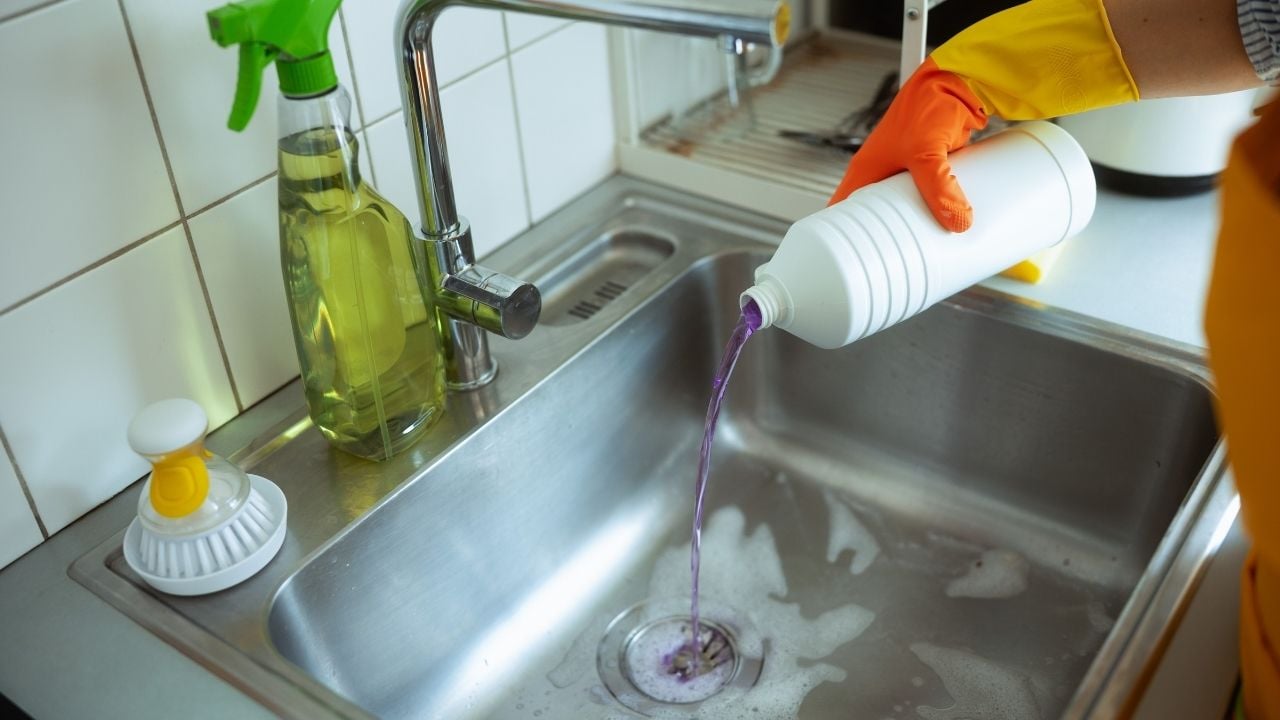
Reaching for a bottle of drain cleaner feels like the obvious first move when a sink stops draining. It’s sitting right there on the store shelf, promises to dissolve the clog in minutes, and doesn’t require calling anyone. But ask any licensed plumber, and you’ll get the same answer: chemical drain cleaners are one of the most common ways homeowners turn a manageable clog into a much bigger, more expensive problem.
If you’re a homeowner in Maple Shade, Delran, or Beverly reaching for that bottle under the sink, here’s what these products actually do inside your pipes — and why professional clearing is almost always the safer, more lasting fix.
How Chemical Drain Cleaners Actually Work
Most store-bought drain cleaners fall into one of three categories, and each works through a different — often harsh — chemical reaction:
Caustic cleaners (typically containing lye or sodium hydroxide) work by generating heat and breaking down organic material like hair and grease through a chemical reaction. That heat is intense enough to soften clogs, but it’s also intense enough to stress plastic pipe fittings and seals not built to handle it repeatedly.
Acid-based cleaners (often containing sulfuric acid) work more aggressively and faster than caustic products, dissolving organic material through a strong acidic reaction. These are the harshest consumer-available option and carry real safety risk if mishandled.
Oxidizing cleaners use a chemical reaction that generates gas to break down blockages. These are generally milder than the other two types but still involve a reactive chemical process happening inside your pipes, not just a mechanical clearing.
In every case, the “clean” you’re seeing — water draining again — often just means a narrow channel has been dissolved through the clog, not that the clog and the buildup coating the pipe walls have actually been removed.
Why These Products Damage Older Pipes
South Jersey has no shortage of homes with plumbing that predates modern PVC — older galvanized steel, cast iron, and even homes with a mix of pipe materials from decades of partial updates. Chemical drain cleaners pose a real risk to exactly this kind of plumbing:
Heat damage to plastic components. The intense heat generated by caustic cleaners can soften or warp older PVC pipes, and repeated use accelerates wear on joints and seals that were never designed to handle that kind of thermal stress on a regular basis.
Corrosion of metal pipes. Acidic and caustic formulas can accelerate corrosion in aging metal pipes, thinning pipe walls that are often already compromised by years of use. What starts as a clog can end with a pinhole leak or a pipe failure caused not by age alone, but by repeated chemical exposure.
Damage to fixtures, not just pipes. Porcelain, older enamel finishes, and certain fixture materials can also be damaged by prolonged or repeated contact with harsh drain chemicals, leading to etching or discoloration beyond the pipe itself.
The irony is that homes with the oldest, most vulnerable plumbing are often the ones where chemical drain cleaners get reached for most — because older pipes clog more often, and the bottle feels like the fast fix.
The Danger of Mixing Products
One of the most serious risks with chemical drain cleaners isn’t the product itself — it’s what happens when different chemical products come into contact with each other inside a drain. Certain common household cleaning chemicals, when combined, can produce toxic fumes that are dangerous to breathe in an enclosed space like a bathroom or under-sink cabinet. This risk is especially real when a homeowner tries one product, it doesn’t fully work, and they pour in a different type of drain cleaner (or even an unrelated household cleaner) without flushing thoroughly in between.
The safest rule is simple: never mix drain cleaning products, and never use a second chemical product if the first one hasn’t fully cleared the clog. If you’ve already used a chemical cleaner and the clog remains, that’s the moment to call a plumber — not to try a stronger product on top of it.
Chemical Cleaners Often Mask the Real Problem
Here’s the issue that matters most for long-term pipe health: even when a chemical cleaner successfully restores drainage, it frequently hasn’t solved the underlying problem. Dissolving a channel through a clog is not the same as removing the buildup coating the interior of the pipe, clearing a root intrusion, or addressing a structural issue like a bellied or misaligned section of pipe.
This means a homeowner can pour chemical cleaner down the same drain every few months, get temporary relief each time, and never actually address why that drain keeps clogging in the first place — all while potentially accelerating pipe damage with every application. What looks like a series of quick fixes is often, in reality, a slowly worsening problem being chemically papered over.
Safety Risks to You, Not Just Your Pipes
Beyond pipe damage, chemical drain cleaners carry direct safety risks to the person using them: skin and eye contact with concentrated caustic or acidic formulas can cause serious burns, and inhaling fumes in a poorly ventilated bathroom or utility space can cause respiratory irritation. Splashback while pouring — especially into a sink or tub that already has standing water — is a common way these injuries happen, even among people being careful.
If a chemical drain cleaner has been used and a clog still isn’t resolved, a plumber needs to know that before doing any further work — mechanical tools used on a drain that still contains chemical residue can cause splashback risk for the technician as well, which is exactly why being upfront about what’s already been tried matters.
What Plumbers Use Instead — and Why It Works Better
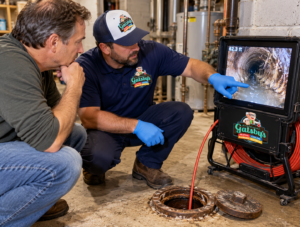
Professional drain cleaning relies on mechanical methods rather than chemical reactions: motorized drain snaking physically breaks up and removes a clog rather than dissolving a channel through it, and hydro jetting uses high-pressure water to scour the full interior of the pipe, removing grease, scale, and buildup that chemical products never touch. Both approaches actually restore the pipe’s flow capacity rather than temporarily working around a narrowed channel — which is why professionally cleared drains tend to stay clear far longer than chemically treated ones.
The Pain Point: The “Quick Fix” Often Costs More Later
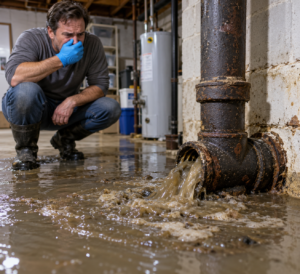
Here’s the trade-off worth understanding: a bottle of drain cleaner costs less than a plumber’s visit today, but repeated use on the same recurring clog can accelerate pipe corrosion, weaken joints, and eventually turn a simple clog into a pipe replacement — a repair that costs dramatically more than the professional clearing that would have solved it the first time. The “cheap and fast” option isn’t actually cheaper if it’s quietly damaging the pipe every time you use it.
Let Professor Gatsby’s Clear It the Right Way
If you’re dealing with a stubborn or recurring clog — especially if you’ve already tried a chemical product without lasting results — it’s time for a professional approach that actually solves the problem. Our licensed plumbers serve homeowners throughout South Jersey area, offering drain clearing and hydro jetting services that clear the full pipe, not just a channel through the clog.
Already tried a chemical drain cleaner without luck? Contact Professor Gatsby’s or book an appointment online — and let us know what’s already been used so we can clear it safely.
3 South Jersey Locations to Serve You