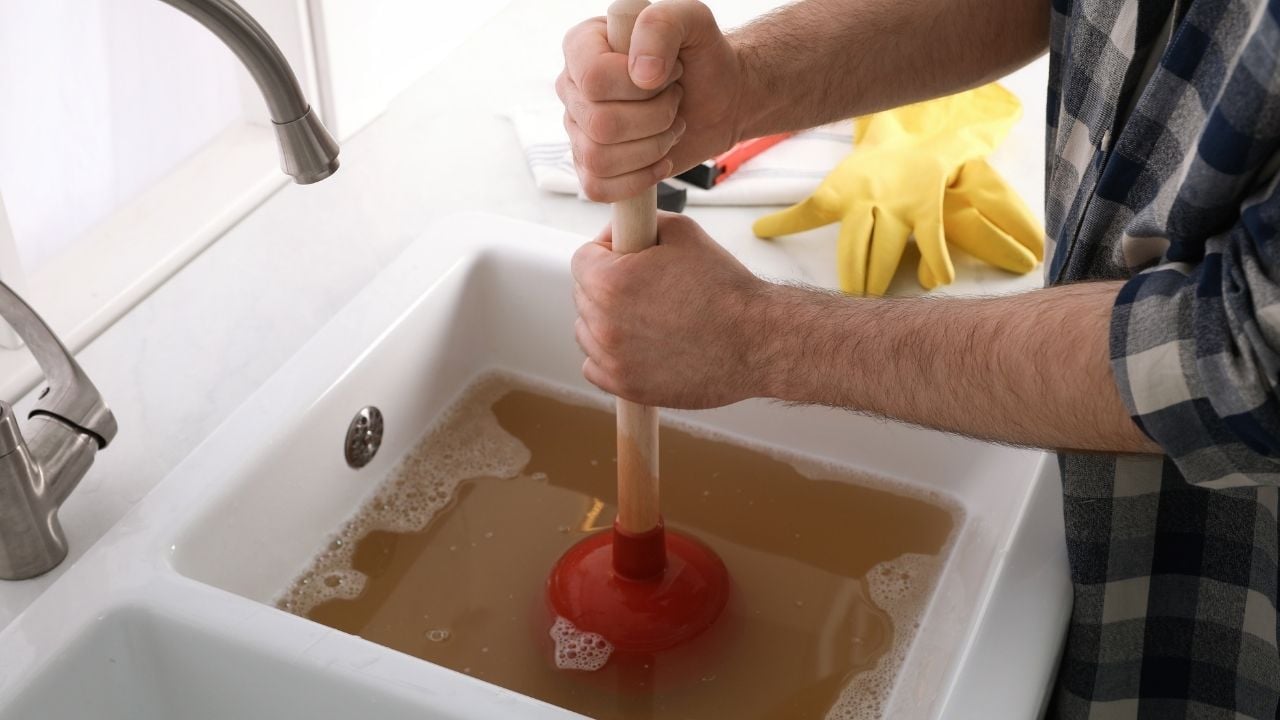
There’s a specific kind of frustration that comes with clearing a clogged drain, feeling relieved it’s finally handled, and then watching the exact same problem come back a few weeks later. If this sounds familiar, you’re not doing anything wrong with your clearing method necessarily — you’re likely dealing with an underlying cause that a surface-level fix was never going to solve in the first place.
If you’re a homeowner in Pennsville, Mantua, or Washington Township stuck in this cycle, here’s what’s actually causing recurring clogs, and why “clearing” a drain isn’t always the same as fixing it.
Buildup Coating the Pipe Walls
This is the most common reason a clog keeps returning. When a clog is cleared with a plunger, a basic snake, or a chemical cleaner, what often happens is that a channel gets opened through the blockage — but grease, soap scum, and mineral scale coating the rest of the pipe’s interior surface stays right where it is. That coating doesn’t just sit there passively; it continues trapping new debris every time water flows through, narrowing the effective diameter of the pipe a little more each time.
Why a quick fix doesn’t solve it: Clearing the immediate blockage restores flow temporarily, but it doesn’t address the layer of buildup that caused the pipe to narrow in the first place. The clog you “fixed” was really just the point where buildup finally became severe enough to fully block the pipe — and that buildup is still there, ready to narrow the pipe again.
Bellied (Sagging) Pipes
A “belly” in a pipe is a low spot that’s formed due to settling soil, poor original installation, or age — instead of maintaining a consistent downward slope toward the sewer connection, the pipe dips and then rises again, creating a section where water and debris collect rather than flowing straight through.
Why a quick fix doesn’t solve it: A belly is a structural issue, not a debris issue. Snaking or jetting can clear whatever has accumulated in the low spot at that moment, but because the physical dip in the pipe remains, debris will continue settling in that same spot every time. This is one of the clearest cases where repeat clogs in the exact same location, over and over, point to something a cleaning method alone can never permanently fix — the pipe itself may need to be repaired or replaced to correct the slope.
Root Intrusion
Tree roots are drawn to the moisture and nutrients inside sewer and drain pipes, and once a root finds its way in through a cracked joint or aging pipe material, it doesn’t stop growing. Roots can be cut back with a mechanical auger equipped with a cutting head, temporarily restoring flow.
Why a quick fix doesn’t solve it: Cutting roots back is a temporary measure, not a permanent one — the root system is still alive underground, and it typically regrows into the same opening within months. Homeowners who deal with the “same clog” every six months to a year, particularly in older, tree-lined South Jersey neighborhoods, are very often dealing with root regrowth rather than a new, unrelated problem each time.
Offset or Misaligned Pipe Joints
Over time — through soil movement, ground settling, or simply aging materials — pipe joints can shift slightly out of alignment. Even a small offset creates a ledge or lip inside the pipe where debris catches instead of flowing smoothly past.
Why a quick fix doesn’t solve it: Similar to a bellied pipe, this is a physical, structural issue rather than a debris problem. Clearing whatever has built up at the offset joint provides temporary relief, but the ledge causing debris to catch in the first place is still there, waiting to catch the next round of buildup.
Incorrect Pipe Pitch
Drain and sewer pipes are designed to be installed at a specific slope — enough to keep wastewater and solids moving efficiently toward the sewer connection, but not so steep that water outpaces solid waste and leaves it behind. A pipe installed with too little pitch (or, less commonly, one that’s changed pitch due to settling) doesn’t move waste efficiently, leading to repeated buildup even in an otherwise undamaged pipe.
Why a quick fix doesn’t solve it: This is a design or installation issue that clearing tools have no ability to correct. A pipe with inadequate pitch will continue collecting debris at a faster-than-normal rate no matter how often it’s cleared, until the pitch problem itself is addressed.
Recurring Habits That Reintroduce the Problem
Sometimes recurring clogs aren’t a structural issue at all — they’re a sign that whatever caused the original clog is still happening. Grease still going down the kitchen sink, a garbage disposal still being used for fibrous or starchy scraps it can’t handle, or a household member still not using a hair catcher in the shower can all reintroduce the exact same buildup that was just cleared.
Why a quick fix doesn’t solve it: In this case, the clearing method isn’t the problem — the ongoing habit is. No amount of professional clearing prevents a clog from returning if the same material keeps going down the same drain in the same way.
How to Tell Which Cause You’re Dealing With
The pattern of your recurring clog is actually a useful diagnostic clue. A clog that returns in the exact same location every time often points to a structural issue — a belly, an offset joint, or root intrusion. A clog that seems to move around, or that returns gradually over months rather than suddenly, is more consistent with buildup coating the pipe walls. And a clog that returns quickly after clearing, tied to a specific kitchen or bathroom habit, may simply need a change in what’s going down the drain rather than a pipe repair at all.
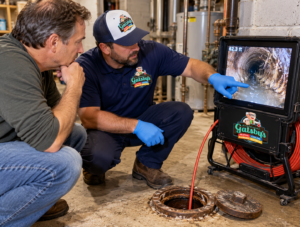
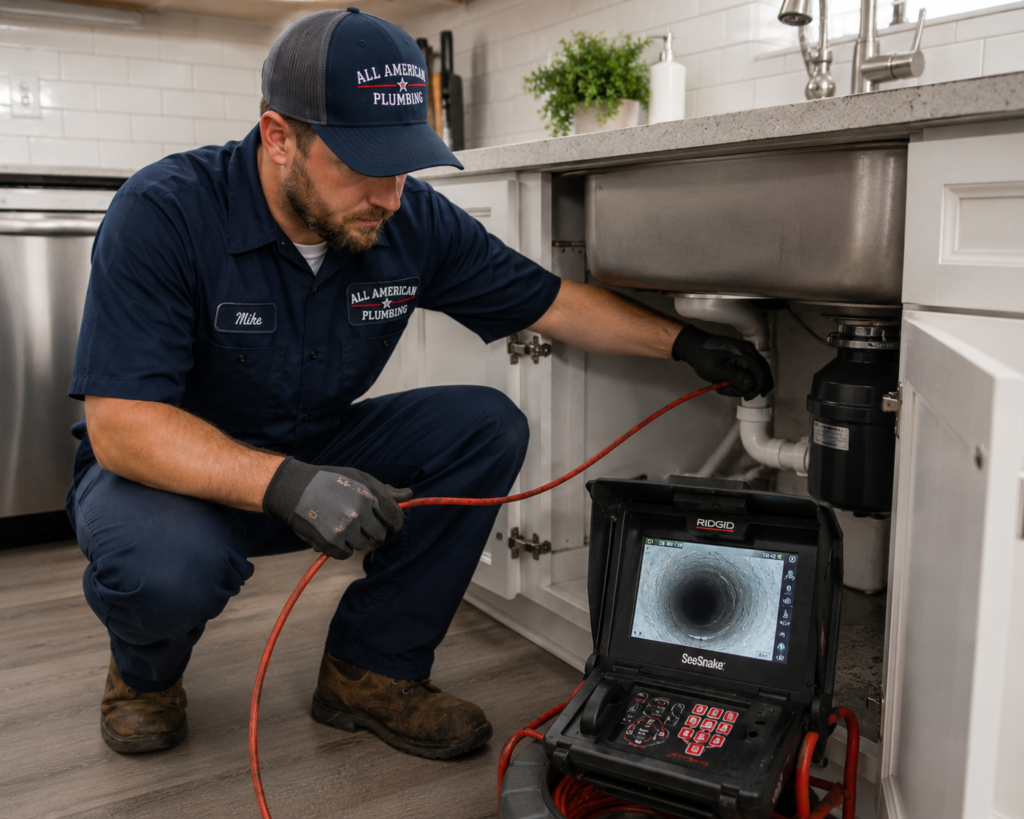
The honest answer is that most homeowners can’t reliably tell these apart without a closer look — which is exactly what a camera inspection is for.
The Pain Point: Repeat Service Calls Add Up to More Than a Real Fix Would Cost
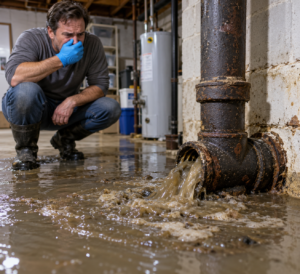
Here’s the math worth doing: paying for a basic drain clearing every few months, indefinitely, because the underlying cause was never addressed, often ends up costing more over a year or two than a single hydro jetting service or pipe repair that actually resolves the root cause. Beyond the financial cost, there’s the ongoing inconvenience and risk — every recurring clog is another chance for a full backup to happen at an inconvenient time, and structural issues like bellied pipes or root intrusion tend to get worse, not better, the longer they’re only ever partially addressed.
Let Professor Gatsby’s Find the Actual Cause
If you’re stuck in a cycle of clearing the same drain over and over, it’s time to find out why — not just clear it again. Our licensed plumbers serve homeowners throughout South Jersey area, and we can perform a sewer camera inspection to identify exactly what’s causing your recurring clog, then recommend the right fix — whether that’s hydro jetting to fully clear built-up pipe walls, or a sewer or water line repair if a structural issue is the real culprit.
Tired of clearing the same drain over and over? Contact Professor Gatsby’s or book an appointment online and let us find out what’s really going on.
3 South Jersey Locations to Serve You