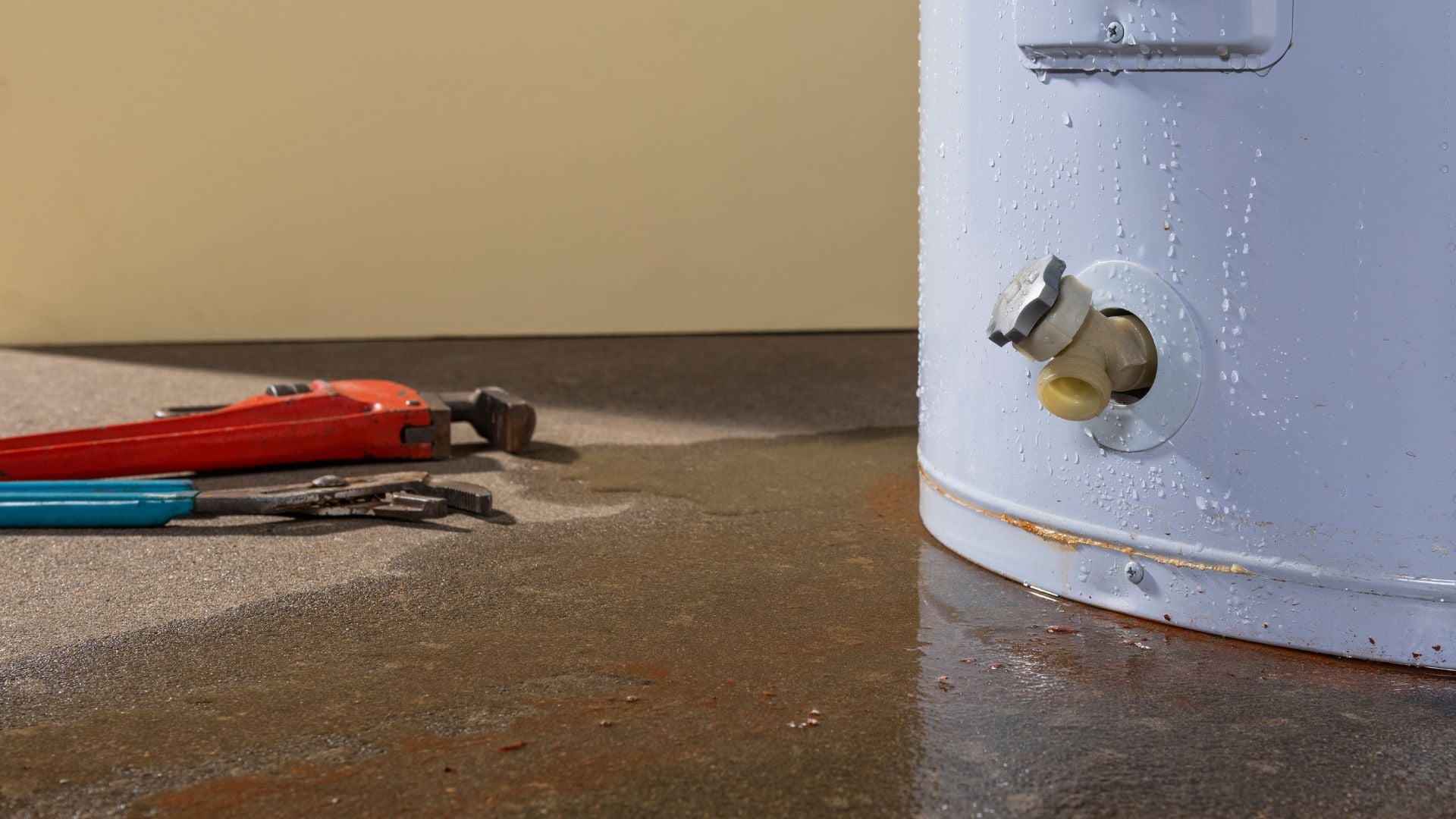
Finding water pooling around your water heater is one of those moments that immediately raises the stakes. Is it a minor drip you can deal with this weekend, or a sign the tank is about to fail completely? The honest answer is: it depends on where the water is coming from — and that’s exactly what most homeowners can’t tell just by looking at a puddle.
If you’re a homeowner in Wenonah, National Park, or Mickleton staring at an unexpected leak, here are the five most common causes, how to narrow down which one you’re dealing with, and what to do right now to protect your home.
1. Tank Corrosion
This is the cause every homeowner dreads, because it usually means the tank itself has reached the end of its life. Every water heater tank has a sacrificial anode rod designed to corrode first and protect the steel tank lining. Once that rod is fully depleted — which typically happens over years of use, faster in homes with harder water — the tank’s interior begins corroding directly. Eventually, that corrosion creates a pinhole leak or a larger crack in the tank itself.
How to tell: A leak from tank corrosion often appears as moisture seeping from the tank’s body itself, not from a specific fitting or valve. Rust-colored water, or rust staining around the leak, is another strong indicator.
What this means: Unlike a fitting or valve, a corroded tank cannot be repaired — once the tank itself is compromised, replacement is the only real option.
2. Loose or Failing Fittings and Connections
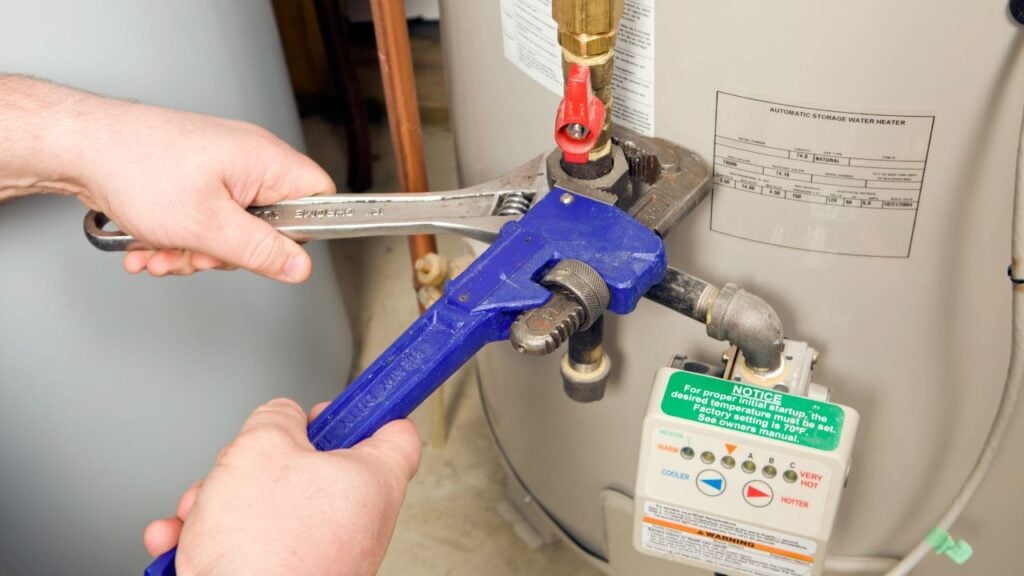
Water heaters have several fittings and connection points — where the water supply lines connect, where the drain valve attaches, and where other components thread into the tank. Over time, these connections can loosen due to normal vibration and temperature changes, or the washers and seals inside them can degrade.
How to tell: Leaks from fittings are usually localized to a specific spot — you can often trace the moisture back to one particular connection point rather than the tank body itself.
What this means: This is one of the more repairable causes on this list. In many cases, tightening or replacing a fitting resolves the leak entirely, without needing to touch the tank.
3. A Failing Temperature and Pressure (T&P) Relief Valve
The T&P relief valve is a safety device designed to release water automatically if the tank’s internal pressure or temperature reaches unsafe levels. Valves can fail in two ways relevant to leaks: they can develop a slow drip due to normal wear and mineral buildup, or they can be triggered by an actual pressure or temperature problem inside the tank — meaning the “leak” is the valve doing exactly what it’s supposed to do in response to a bigger issue.
How to tell: Water dripping specifically from the discharge pipe connected to this valve (usually located on the side or top of the tank, running down toward the floor) points to this cause.
What this means: A worn valve can often be replaced on its own. But if the valve is releasing water because the tank is actually overheating or over-pressurizing, that underlying cause needs to be diagnosed — replacing the valve alone won’t fix the real problem.
4. A Leaking Drain Valve
The drain valve, located near the bottom of the tank, is used to flush sediment and fully drain the unit when needed. These valves are usually plastic or brass, and over time, they can develop leaks from mineral buildup preventing a full seal, general wear, or a valve that was never fully closed after a previous flush.
How to tell: Water dripping specifically from the small valve near the bottom of the tank — often just a slow, steady drip — points here.
What this means: This is typically one of the easier and less expensive leaks to resolve, often requiring only a valve replacement or repair rather than any work on the tank itself.
5. Condensation (Not Always an Actual Leak)
Sometimes what looks like a leak isn’t one at all. If you have a gas water heater and you’ve recently had the temperature turned up, added a new unit, or are running the tank in a particularly cold or humid space, condensation can form on the tank’s exterior as cold incoming water cools the surface faster than the surrounding air can keep up. This is more common with new installations or during seasonal temperature swings.
How to tell: Condensation-related moisture tends to appear as a light film or small droplets across the tank’s surface, rather than a clear stream or puddle pointing back to one specific source.
What this means: True condensation isn’t a defect and typically resolves on its own as conditions stabilize. That said, it’s worth confirming with a professional that it’s actually condensation and not an early-stage leak from one of the causes above — the two can look similar at first glance.
What to Do Right Now If You Find a Leak
- Turn off the power or gas to the unit. For electric water heaters, shut off the breaker. For gas units, turn the gas control valve to the “off” position. This protects both the unit and your safety while you assess the situation.
- Shut off the water supply to the tank. This stops the leak from getting worse and limits further water damage while you figure out next steps.
- Try to identify the source. Use the descriptions above to narrow down whether the leak is coming from the tank itself, a fitting, or a valve — this helps whoever you call diagnose the issue faster.
- Clean up standing water promptly. Standing water left too long can damage flooring, drywall, and create conditions for mold growth, especially in enclosed utility closets or finished basements.
- Call a professional before assuming it’s a simple fix. Even leaks that look minor can be a symptom of a larger issue, and a professional can quickly tell you whether you’re looking at a quick repair or a sign it’s time to replace the unit.
When a Leak Means Replacement, Not Repair
As a general rule: leaks coming from fittings, valves, or the drain valve are usually repairable without replacing the entire unit. A leak coming directly from the tank body itself — especially accompanied by rust-colored water or visible corrosion — almost always means the tank has failed structurally, and no repair will resolve that. At that point, replacement isn’t just the recommended option, it’s the only one that actually solves the problem rather than delaying an eventual full failure.
The Pain Point: A Slow Leak Rarely Stays Slow
Here’s what makes water heater leaks worth addressing immediately rather than monitoring for a while: what starts as a small drip from a corroding tank tends to worsen, not stabilize. A pinhole leak today can become a split seam next month, and a water heater failure of that kind can release dozens of gallons across a basement or utility closet in a short amount of time — damaging flooring, drywall, and anything stored nearby. Addressing a leak while it’s still minor is almost always less disruptive, and less expensive, than waiting for it to become an emergency.
Related Reading
If you’re trying to figure out whether your water heater’s issue goes beyond a simple leak, a few of our other guides may help: our breakdown of warning signs that a gas water heater is nearing the end of its life, our troubleshooting guide for electric water heaters not producing hot water, and our tips on maintenance steps that extend an electric water heater’s lifespan if you’d rather prevent leaks before they start.
Found a Leak? Let Professor Gatsby’s Take a Look
Don’t wait to see if a leak gets worse on its own — it usually does. Our licensed plumbers serve homeowners throughout the South Jersey area, and we can quickly diagnose whether your water heater needs a repair or a full replacement.
Found water around your water heater? Contact Professor Gatsby’s or book an appointment online before a small leak turns into real water damage.
3 South Jersey Locations to Serve You